CJC-1295 & Ipamorelin: Growth Hormone Secretagogue Research
Introduction: The Growth Hormone Axis
Growth hormone (GH) is a 191-amino acid peptide secreted by the anterior pituitary gland in pulsatile bursts. Its release is governed by two opposing hypothalamic signals: growth hormone-releasing hormone (GHRH), which stimulates secretion, and somatostatin, which inhibits it. Growth hormone secretagogues (GHS) are peptides designed to amplify these natural pulses rather than replace them — a critical distinction from exogenous GH administration.
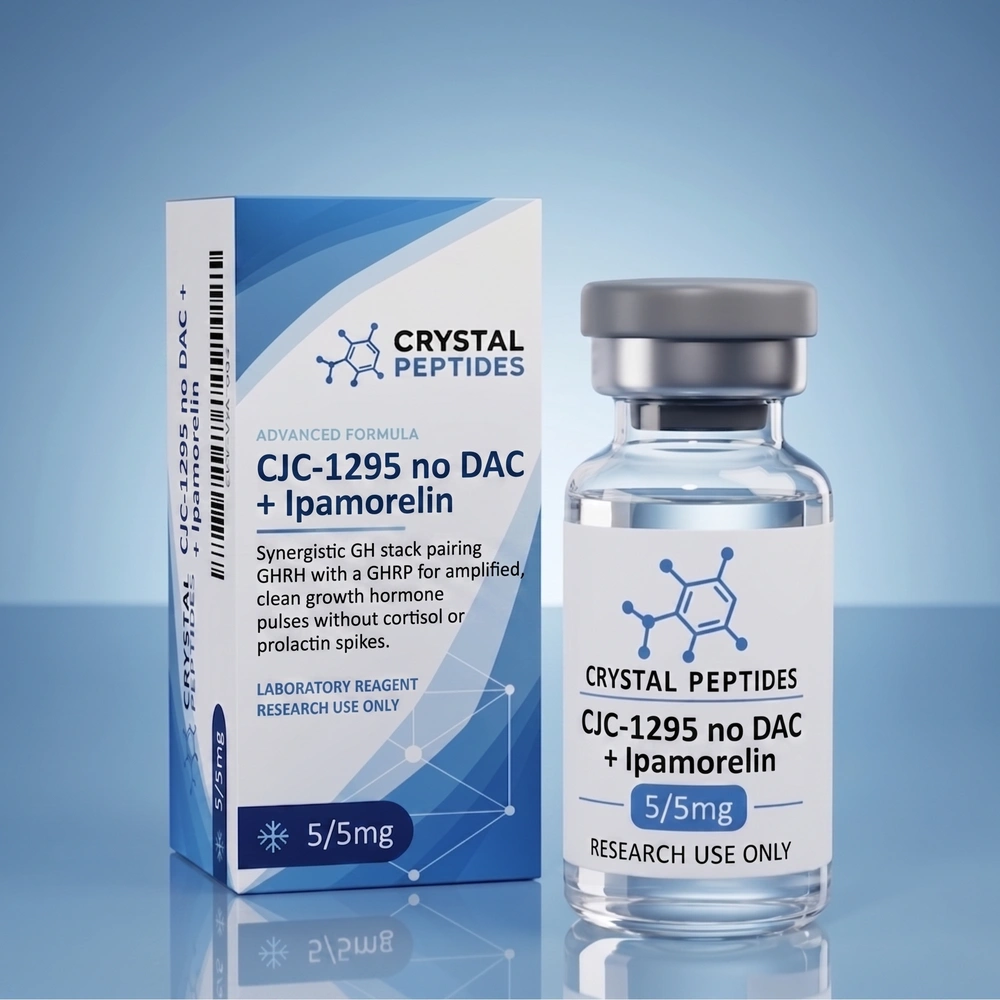
The combination of CJC-1295 (a GHRH analogue) and Ipamorelin (a selective ghrelin receptor agonist) has become the most widely studied GHS stack in peptide research due to their complementary mechanisms.
CJC-1295: The GHRH Amplifier
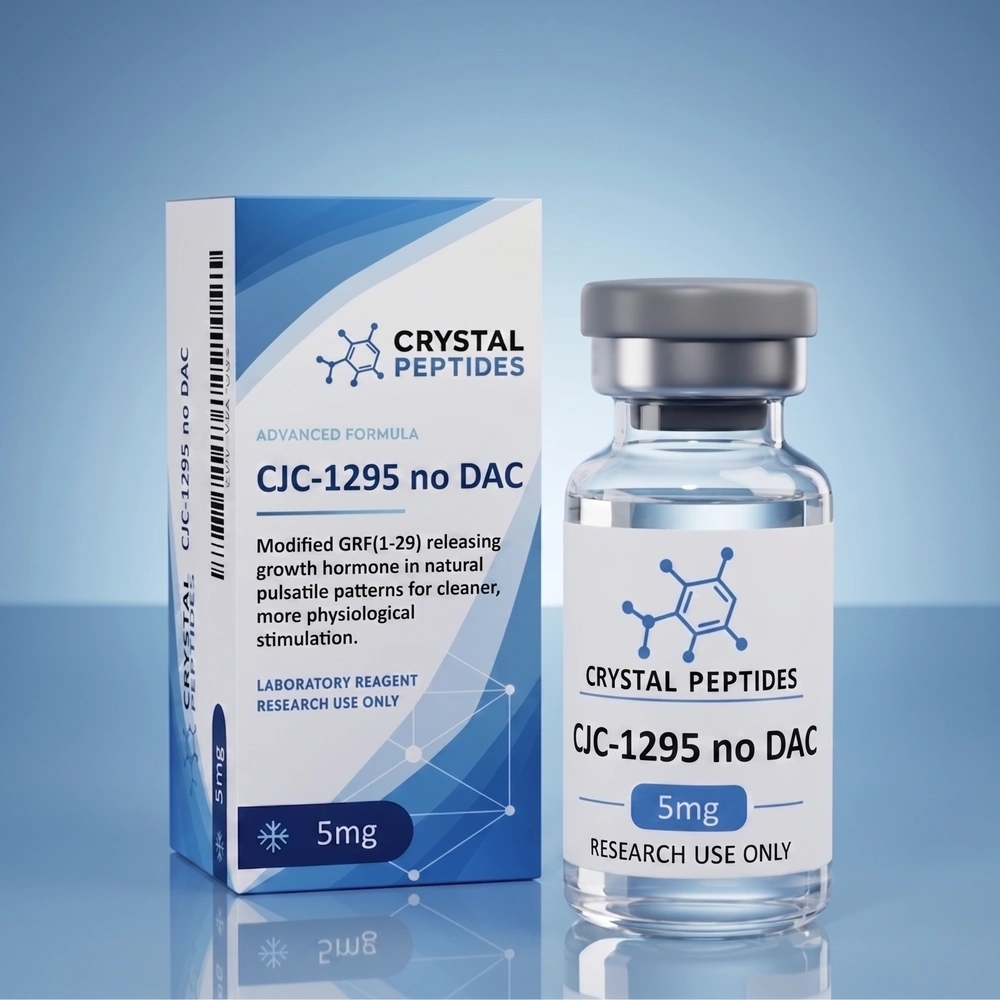
CJC-1295 is a synthetic analogue of GHRH (1-29), modified at four amino acid positions to resist enzymatic degradation by dipeptidyl peptidase IV (DPP-IV). This modification extends its half-life from approximately 7 minutes (native GHRH) to over 30 minutes for CJC-1295 no DAC.
Mechanism of Action
- GHRH receptor binding: CJC-1295 binds to the GHRH receptor (GHRHR) on somatotroph cells in the anterior pituitary, stimulating the cAMP/PKA signaling cascade.
- Pulsatile amplification: Rather than creating a constant GH elevation (as exogenous GH does), CJC-1295 amplifies natural GH pulses, maintaining the body's physiological release pattern.
- IGF-1 elevation: By increasing GH pulse amplitude, CJC-1295 raises insulin-like growth factor 1 (IGF-1) levels, which mediates many of GH's downstream anabolic and regenerative effects.
Key Studies
Teichman and colleagues investigated a long-acting CJC-1295 analogue in healthy adults and measured sustained GH and IGF-I responses. Those findings must not be attributed automatically to short-acting Mod GRF(1-29), commonly sold as CJC-1295 without DAC, or to a CJC-1295/Ipamorelin blend. Teichman et al., 2006.
Ipamorelin: The Selective Ghrelin Mimetic
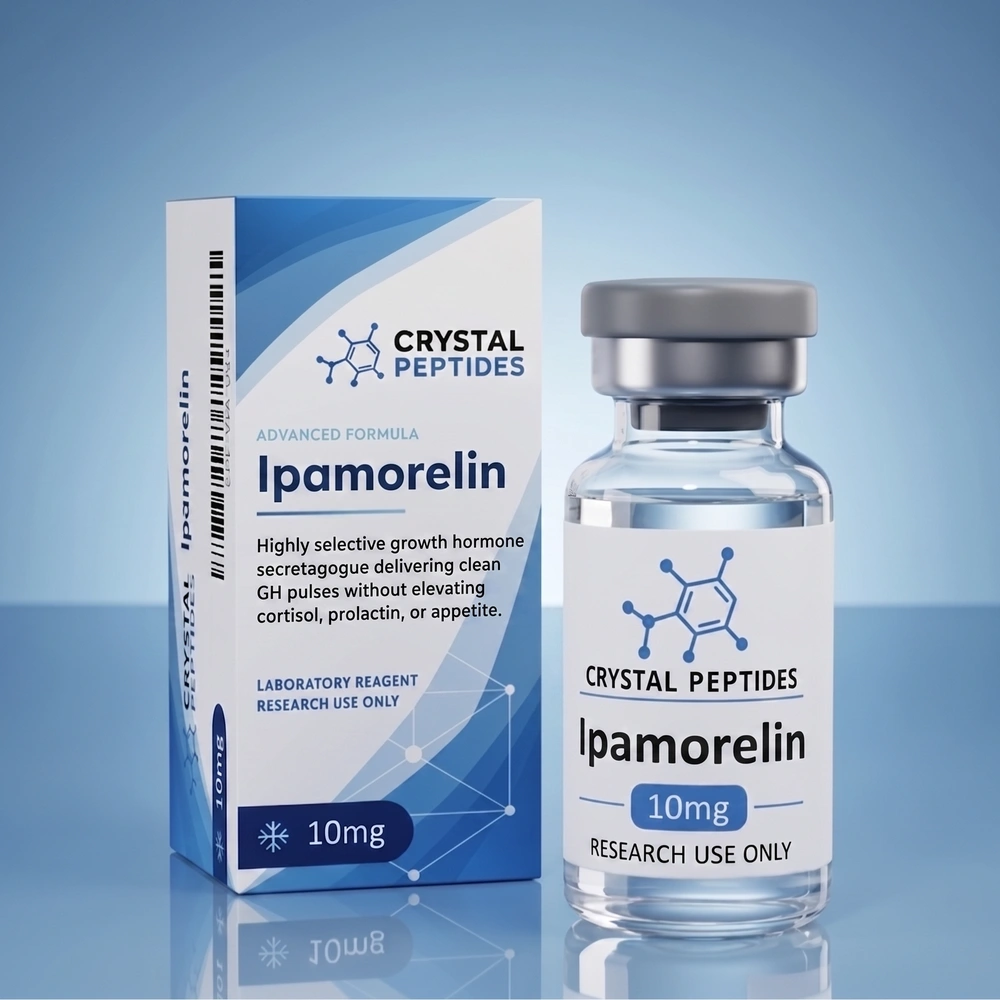
Ipamorelin is a pentapeptide that acts as a selective agonist of the growth hormone secretagogue receptor (GHS-R1a), commonly known as the ghrelin receptor. Unlike earlier ghrelin mimetics such as GHRP-6, Ipamorelin is highly selective — it stimulates GH release without significantly affecting cortisol, prolactin, or appetite.
Mechanism of Action
- GHS-R1a activation: Binds to the ghrelin receptor on pituitary somatotrophs, triggering GH release through a pathway distinct from GHRH signaling.
- Somatostatin suppression: Reduces the inhibitory tone of somatostatin, allowing larger GH pulses when combined with GHRH signaling.
- Selectivity profile: Reported as more selective than earlier secretagogues in the cited work; absolute absence of cortisol or prolactin effects cannot be assumed across species, doses and formulations.
Key Studies
Raun et al. (1998) published that Ipamorelin releases GH with a potency and efficacy comparable to GHRP-6, but without the dose-dependent increases in cortisol and prolactin observed with less selective secretagogues.
The Synergy: Why CJC-1295 + Ipamorelin Together
The combination is studied on the principle of dual-pathway stimulation: activating the GHRH pathway (CJC-1295) and the ghrelin pathway (Ipamorelin). Whether this produces a clinical advantage requires evidence for the blend itself.
Research Applications
Body Composition
- Increased lean body mass and reduced visceral adiposity in research models
- Enhanced lipolysis through GH-mediated hormone-sensitive lipase activation
- Improved nitrogen retention supporting protein synthesis
Recovery and Repair
- Accelerated connective tissue repair via IGF-1 mediated collagen synthesis
- Enhanced recovery from musculoskeletal injury when combined with regenerative peptides like BPC-157 and TB-500
- Improved sleep quality through enhanced slow-wave sleep (GH is primarily secreted during deep sleep)
Bone Density
- GH/IGF-1 axis stimulation increases osteoblast activity and bone mineral density
- Relevant for osteoporosis research models
Anti-Aging Overlap
- The GH/IGF-1 axis intersects with other longevity pathways. Researchers studying comprehensive anti-aging protocols often combine GHS with NAD+ for metabolic optimization and Epithalon for telomere maintenance.
DAC vs. No DAC: Understanding the Variants
CJC-1295 is available in two forms:
- CJC-1295 no DAC (Mod GRF 1-29): Shorter half-life (~30 min), produces sharper, more physiological GH pulses. Preferred in most research protocols for mimicking natural GH secretion patterns.
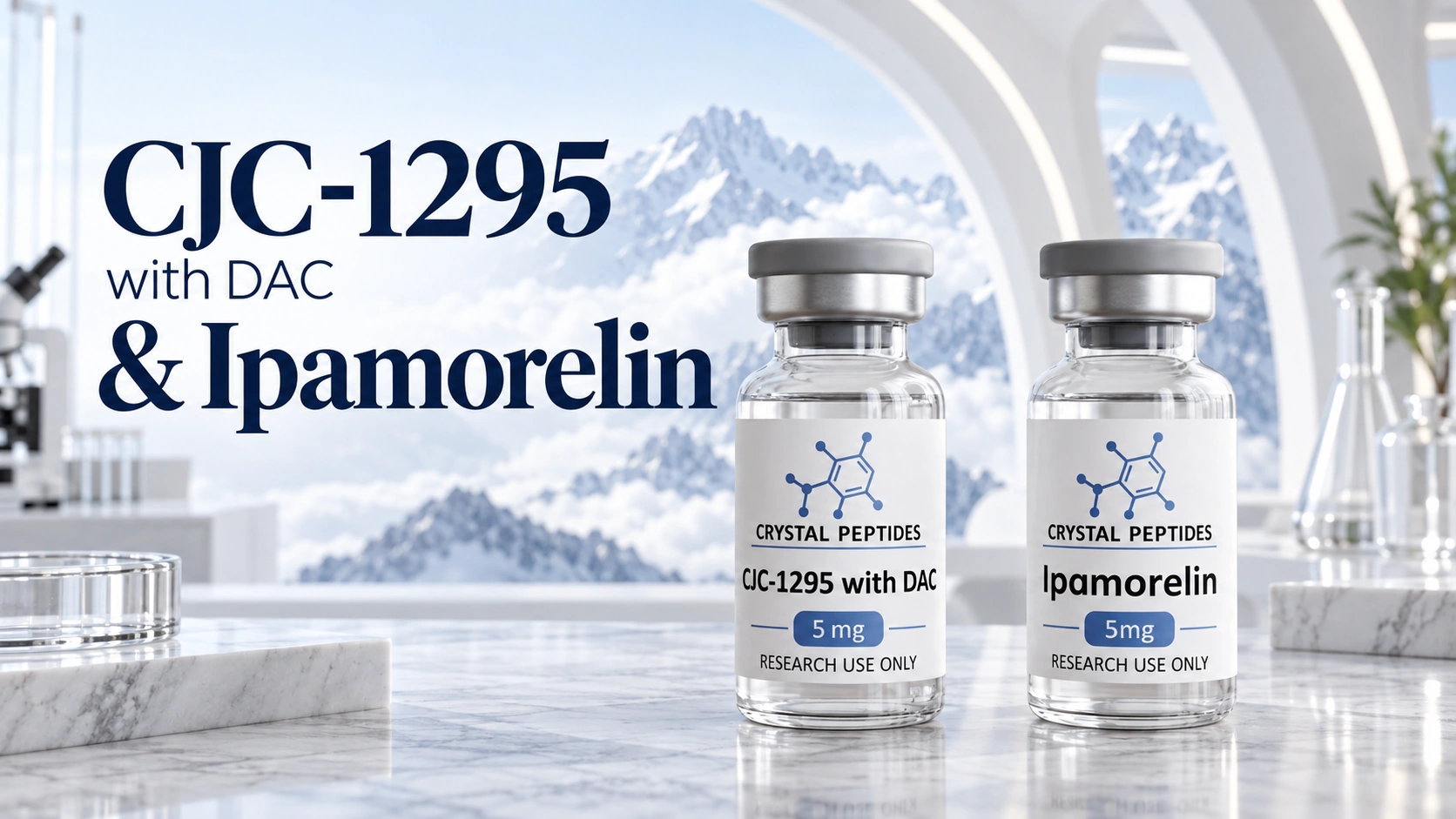
- CJC-1295 with DAC: Drug Affinity Complex extends half-life to ~8 days via albumin binding. Creates sustained GH elevation rather than pulsatile release. Less commonly used due to concerns about GH receptor desensitization.
Safety Profile
The CJC-1295/Ipamorelin combination has a well-characterized safety profile in research:
- Mild transient flushing or warmth at injection site
- Temporary water retention during initial administration periods
- Increased appetite in some protocols (mild compared to GHRP-6)
- Cortisol and prolactin findings depend on the exact study, species, dose and formulation, and should not be generalized
Conclusion
A complementary mechanism does not by itself demonstrate clinical benefit or safety for a combination. Human data for CJC-1295 remain limited, and FDA has identified safety concerns. Claims about a blend require evidence for that blend. FDA assessment.
Explore the Products from This Article
All products are >99% purity, manufactured in a certified EU laboratory, with accompanying lab analysis.
Research Disclaimer
This article is for informational and research purposes only. The content is not intended as medical advice, diagnosis, or treatment recommendation.