

Retatrutide: The Triple Agonist Redefining Metabolic Research
What is Retatrutide?
Retatrutide (LY3437943) is an investigational triple incretin receptor agonist developed by Eli Lilly and Company. Unlike the single-receptor agonist Semaglutide (GLP-1 only) and the dual agonist Tirzepatide (GLP-1 + GIP), Retatrutide is studied as a simultaneous agonist at three receptors: GLP-1, GIP and the glucagon receptor. It remains investigational at this review date.
The Triple Mechanism of Action
GLP-1 Receptor Activation
- Reduces appetite through hypothalamic signaling and delayed gastric emptying
- Stimulates glucose-dependent insulin secretion from pancreatic beta cells
- Suppresses glucagon release in a glucose-dependent manner
GIP Receptor Activation
- Enhances insulin sensitivity in adipose tissue
- Promotes lipid metabolism and fat oxidation
- Modulates bone metabolism and energy expenditure
Glucagon Receptor Activation — The Key Differentiator
This is what sets Retatrutide apart from all other incretin-based peptides:
- Increased energy expenditure: Glucagon receptor activation directly increases basal metabolic rate through hepatic energy metabolism
- Enhanced lipolysis: Promotes breakdown of stored fat in both subcutaneous and visceral depots
- Hepatic fat reduction: Glucagon signaling drives fatty acid oxidation in the liver, directly targeting hepatic steatosis (fatty liver)
- Thermogenesis: Stimulates brown adipose tissue activation, converting stored energy into heat
The glucagon component is the main pharmacological difference from dual-agonist approaches. Whether it produces better clinical outcomes has to be established in direct comparative trials rather than inferred from separate studies.
Landmark Clinical Results
Phase 2 Trial (2023)
The Phase 2 study published in the New England Journal of Medicine established Retatrutide as the most potent weight-loss peptide ever tested:
- Participants receiving the highest dose (12 mg) achieved a mean body weight reduction of 24.2% at 48 weeks
- Nearly 100% of participants on the 12 mg dose lost at least 5% of their body weight
- Approximately 26% of participants achieved ≥30% weight loss — a threshold previously only achievable through bariatric surgery
- HbA1c reductions of up to 2.02 percentage points in participants with type 2 diabetes
TRIUMPH-4: The First Successful Phase 3 Trial (December 2025)
In December 2025, Eli Lilly announced the results of TRIUMPH-4, the first Phase 3 clinical trial for Retatrutide, conducted in participants with obesity and knee osteoarthritis:
- 28.7% mean body weight reduction at the 12 mg dose over 68 weeks — translating to an average loss of 71.2 lbs (32.3 kg)
- The 9 mg dose achieved 25.4% weight loss
- Both the 9 mg and 12 mg doses met all primary and secondary endpoints
- WOMAC pain scores (measuring osteoarthritis pain) were reduced by up to 75.8% (4.5 points), demonstrating that weight reduction directly and substantially alleviates joint pain
- Significant improvements in physical function and stiffness measures in the knee joint
- Meaningful reductions in cardiovascular risk factors including blood pressure, lipid profiles, and inflammatory markers
Program Status at This Review Date
Retatrutide remains investigational at this review date. Lilly reported additional positive phase 3 findings from TRIUMPH-2 and TRIUMPH-3 in July 2026 and described a planned FDA submission in early 2027. TRIUMPH-3 studied severe obesity with established cardiovascular disease; these sponsor-reported findings should be distinguished from full peer-reviewed results. Lilly July 2026 update.
Comparative Analysis
| Parameter | Semaglutide (Wegovy) | Tirzepatide (Zepbound) | Retatrutide |
|---|---|---|---|
| Receptor targets | GLP-1 | GLP-1 + GIP | GLP-1 + GIP + Glucagon |
| Peak weight loss (trials) | ~16.0% | ~26.6% | ~28.7% |
| Mechanism class | Single agonist | Dual agonist | Triple agonist |
| Energy expenditure effect | Not compared here | Not compared here | Under investigation |
| Liver fat reduction | Not compared here | Not compared here | Substudy endpoint only |
| Phase 3 completed | Yes (approved) | Yes (approved) | First trial Dec 2025 |
Why the Glucagon Component Matters
The addition of glucagon receptor agonism creates a fundamentally different metabolic profile:
Hepatic Fat Clearance
In a phase 2 substudy, liver fat measured by MRI-PDFF fell substantially in participants who had high baseline liver fat. That result belongs to the substudy population and its endpoint, and it is not a cross-trial ranking against Semaglutide or Tirzepatide. Retatrutide liver-fat substudy.
Body Composition
Analysis from Phase 2 substudies published in The Lancet Diabetes & Endocrinology showed:
- Significant reductions in both subcutaneous and visceral adipose tissue
- Changes in subcutaneous and visceral adipose tissue were reported; the available data do not establish superior lean-mass preservation compared with other agonists
- Any contribution of the glucagon component to body composition remains a hypothesis under investigation
Metabolic Rate
Glucagon receptor agonism is studied as a possible route to higher energy expenditure. An increase in resting metabolic rate in humans is not established here, so the mechanism should not be presented as a proven advantage.
Safety and Tolerability
The TRIUMPH-4 trial revealed important tolerability data:
- Gastrointestinal events remain the most common adverse effects: nausea, diarrhea, vomiting, and constipation — consistent with the GLP-1 class
- Discontinuation rates due to adverse events were 8.6% for 9 mg and 13.6% for 12 mg (compared to 2.4% placebo), which is higher than some competitors and has prompted discussion about dose optimization strategies
- Most GI effects were mild-to-moderate and occurred primarily during dose escalation
- No new safety signals were identified beyond the established GLP-1/GIP/glucagon class effects
Research Significance
Retatrutide represents a paradigm shift in metabolic peptide research for several reasons:
- First triple agonist to reach Phase 3: Tests the hypothesis that adding glucagon receptor activation to GLP-1/GIP agonism changes metabolic outcomes
- Approaching surgical benchmarks: The 28.7% weight loss observed in TRIUMPH-4 begins to rival outcomes seen with Roux-en-Y gastric bypass (30-35% at 2 years)
- Multi-organ metabolic effects: The combination of weight loss, liver fat clearance, and cardiovascular risk factor improvement suggests Retatrutide addresses metabolic disease holistically rather than targeting individual symptoms
- New therapeutic frontiers: The TRIUMPH program is testing Retatrutide across conditions (sleep apnea, CKD, heart failure) that have historically had limited pharmacological options
Available Research Formats
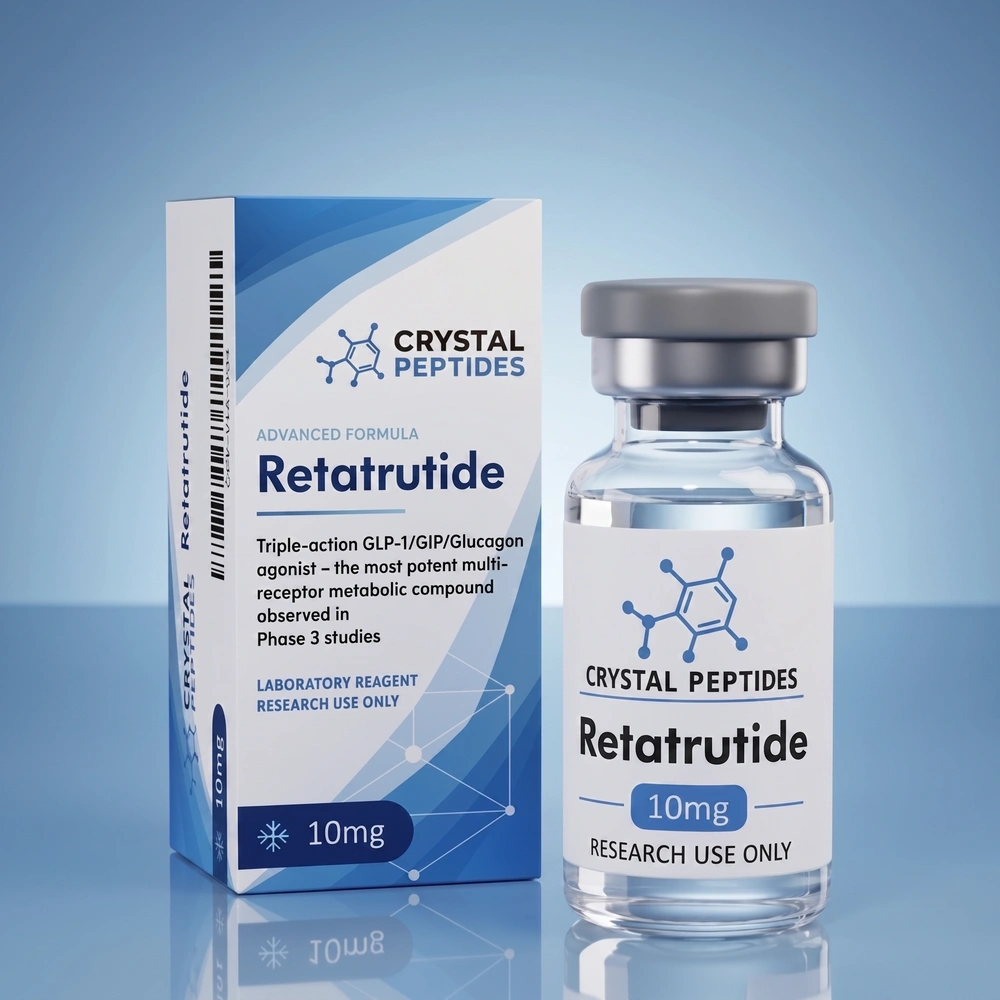
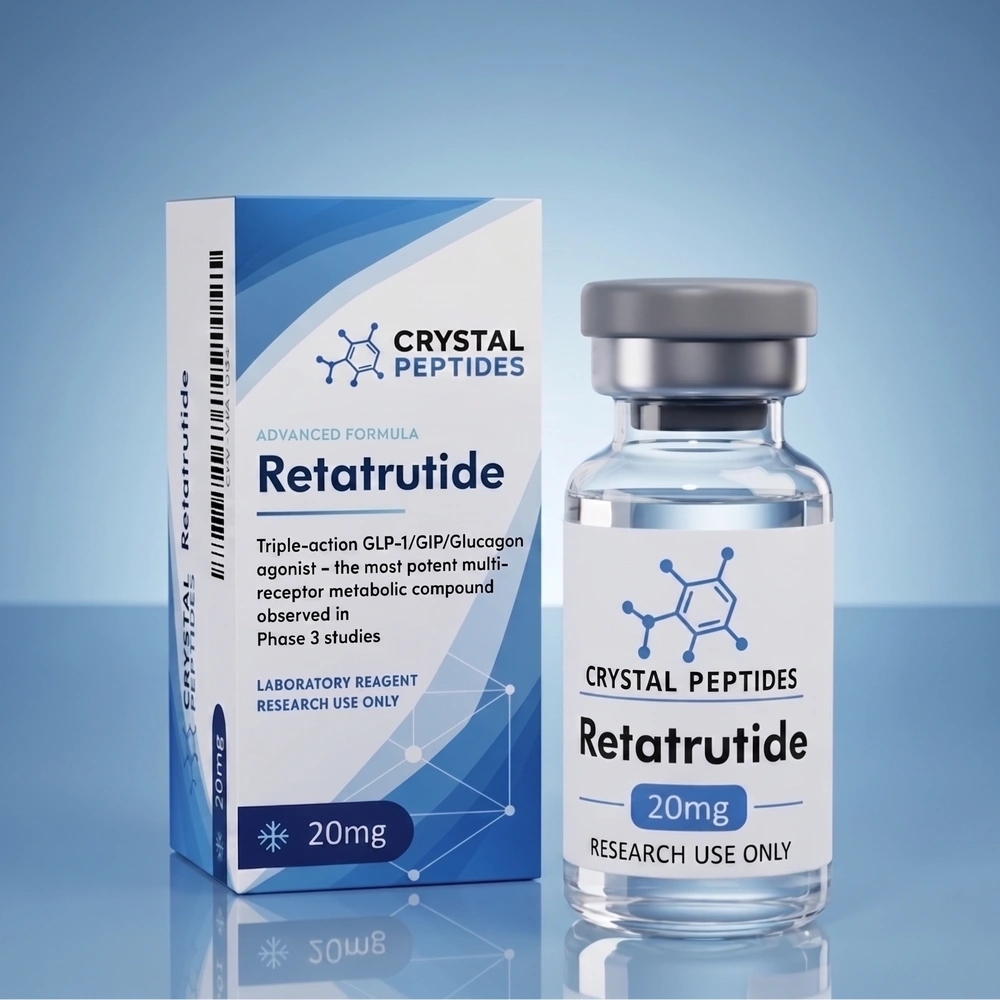
- Lyophilized vials (10mg, 20mg): Standard reconstitution format for subcutaneous research protocols
- Nasal spray (10mg/10ml): An intranasal research format; no efficacy or bioavailability advantage has been demonstrated for it
Conclusion
Retatrutide is one of the most closely followed metabolic peptides in clinical development. TRIUMPH-4 reported 28.7% weight loss and up to 75.8% pain reduction in knee osteoarthritis, and Lilly reported further phase 3 findings in July 2026 with a planned FDA submission in early 2027. These results describe defined trial populations and an investigational medicine, not an approved product or an expected outcome for every individual.
Explore the Products from This Article
All products are >99% purity, manufactured in a certified EU laboratory, with accompanying lab analysis.
Research Disclaimer
This article is for informational and research purposes only. The content is not intended as medical advice, diagnosis, or treatment recommendation.