

Tirzepatide: The Dual GIP/GLP-1 Receptor Agonist
What is Tirzepatide?
Tirzepatide is an agonist at both GIP and GLP-1 receptors. It is the active substance in the medicinal product Mounjaro and has been evaluated in clinical trials as a distinct molecule. The word dual describes its receptor targets, not a drug named GLP-2. EMA Mounjaro.
Dual Mechanism of Action
Unlike single-receptor agonists such as Semaglutide, Tirzepatide activates both:
GIP Receptor Activation
- Enhances insulin sensitivity in adipose tissue
- Promotes lipid metabolism and fat oxidation
- Modulates bone metabolism
- Contributes to energy expenditure regulation
GLP-1 Receptor Activation
- Reduces appetite through hypothalamic signaling
- Slows gastric emptying
- Stimulates glucose-dependent insulin secretion
- Suppresses glucagon release
Clinical Evidence
SURMOUNT Trials
- SURMOUNT-1: Reported up to 22.5% body weight reduction at the highest dose over 72 weeks in the studied population.
- SURMOUNT-2: In type 2 diabetes participants, showed 14.7% weight reduction with improved glycemic control.
- SURMOUNT-3: Combined with lifestyle intervention, reported up to 26.6% total weight loss.
Direct Comparison with Semaglutide
| Feature | Tirzepatide | Semaglutide |
|---|---|---|
| Receptor targets | GIP + GLP-1 | GLP-1 only |
| Max weight loss (trials) | ~22.5% | ~14.9% |
| Mechanism | Dual incretin | Single incretin |
In the randomized SURMOUNT-5 trial, Tirzepatide produced greater weight and waist reductions than Semaglutide at 72 weeks in adults with obesity without type 2 diabetes. This result applies to the interventions and population studied, rather than establishing superiority for every clinical outcome. SURMOUNT-5.
Research Applications
- Advanced metabolic syndrome models
- Comparative incretin receptor studies
- Cardiovascular risk reduction research
- NAFLD/NASH investigation
- Combination therapy research with other peptides
Available Research Formats
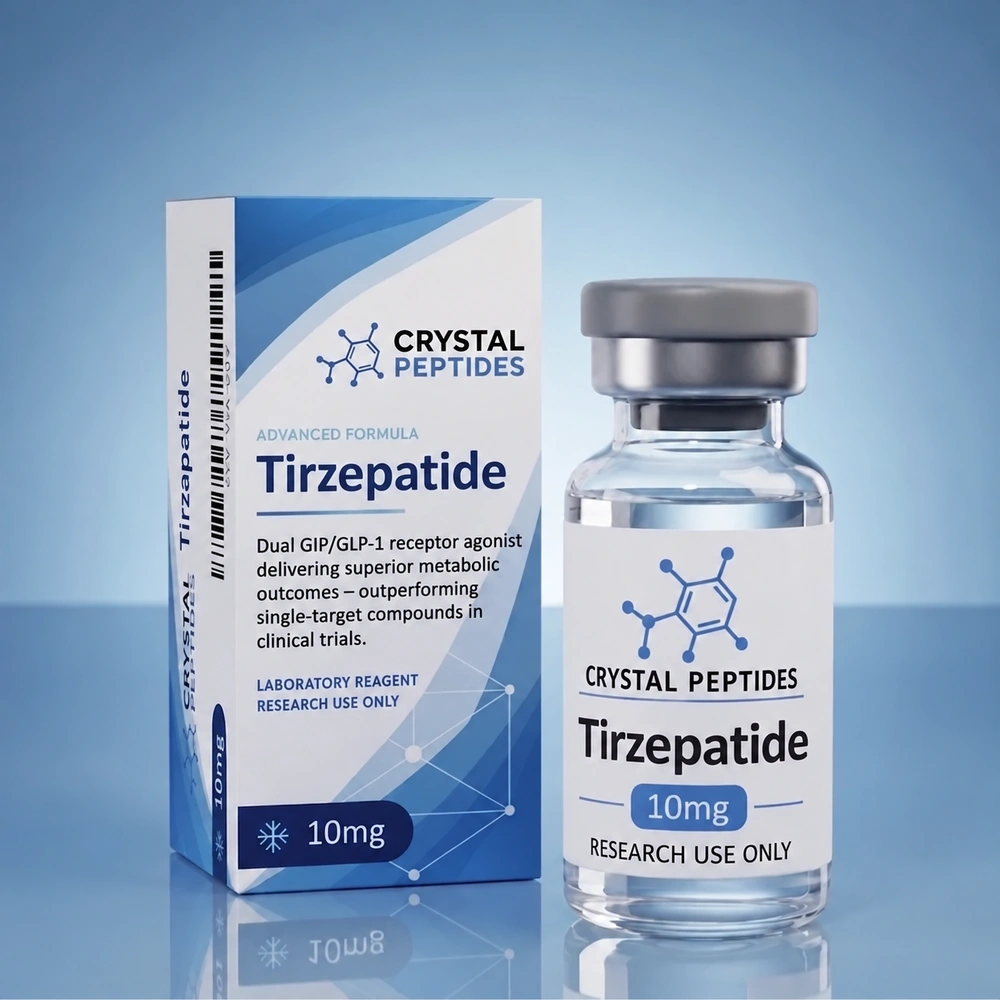
- Lyophilized vials: Standard format for subcutaneous research
- Nasal spray: A research delivery format under investigation
Conclusion
Tirzepatide's activity at two incretin receptors makes it a distinct molecule in metabolic research. Its trial results describe defined populations and endpoints and should not be generalized to every product that shares the compound name.
Explore the Products from This Article
All products are >99% purity, manufactured in a certified EU laboratory, with accompanying lab analysis.
Research Disclaimer
This article is for informational and research purposes only. The content is not intended as medical advice, diagnosis, or treatment recommendation.