How Capsule Peptides Work: Release, Absorption and the Evidence
Release is only the first step
A capsule is a delivery format, not a biological mechanism. Its shell must release the contents; the ingredient must then remain sufficiently intact and reach its target. Dissolution describes material entering solution. Permeation describes movement across a biological barrier. Demonstrating one does not establish the other, and the labelled amount is not the amount reaching the bloodstream.
For peptides, digestive enzymes can break peptide bonds, while the gastrointestinal lining restricts passage of many intact molecules. A short sequence does not automatically overcome these barriers. Protection or enhanced absorption must be demonstrated for the particular formulation.
When the gut itself is the target
KPV, a three-amino-acid peptide, illustrates why local activity deserves separate consideration. In Dalmasso and colleagues’ primary study, experiments in cultured intestinal and immune cells linked KPV uptake to the peptide transporter PepT1 and found reduced inflammatory signalling. Oral KPV also reduced inflammation in mouse colitis models.
These experiments connect a cellular transport mechanism with an intestinal disease model. They do not measure human whole-body bioavailability or establish that a finished KPV capsule treats intestinal disease. Importantly, activity within intestinal tissue need not imply substantial circulating exposure: a local target and a distant target pose different delivery questions.
Why one successful formulation cannot validate another
Research on oral semaglutide formulated with SNAC investigated absorption through the stomach near the tablet. This is evidence for a specific compound–formulation system, not for ordinary peptide capsules as a class. Neither a capsule shell nor an ingredient’s laboratory activity establishes comparable delivery.
Identify the contents before interpreting the evidence
KPV, GHK-Cu and products labelled TB-500 require individual assessment. Topical or injected GHK-Cu findings do not establish oral exposure. For TB-500, the exact sequence and modifications matter: full-length thymosin beta-4 results cannot automatically be assigned to an unspecified fragment. The evidence reviewed here does not verify human oral bioavailability of finished Crystal capsule formulations.
Not every capsule ingredient is a peptide. 9-Me-BC is a beta-carboline small molecule, studied in cellular research. SLU-PP-332 is a synthetic small-molecule ERR agonist investigated in preclinical research. Neither should be explained through peptide transport merely because it shares a capsule format. These studies do not establish human capsule efficacy.
Separate delivery evidence from manufacturing evidence
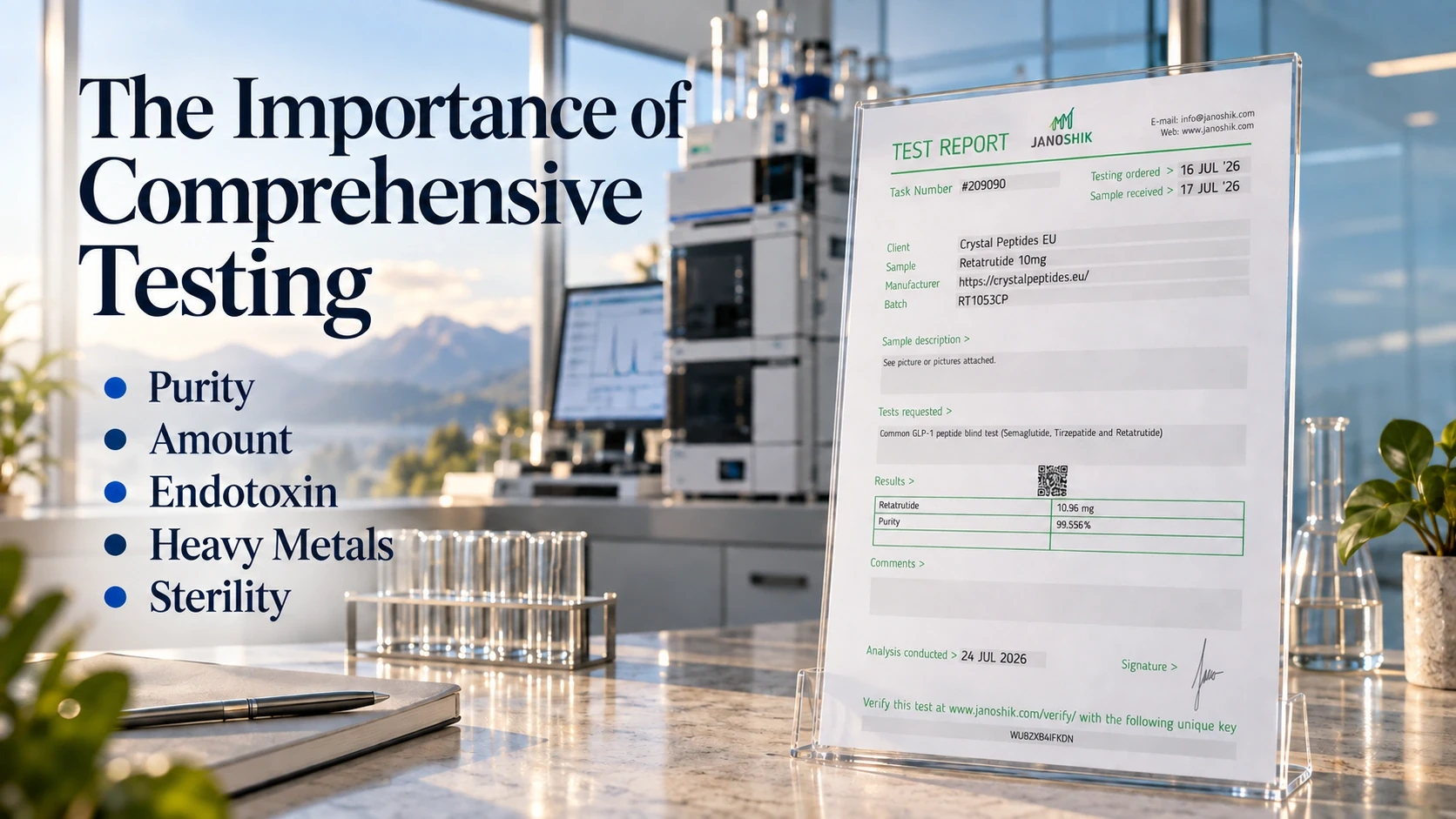
Powder-blend uniformity, individual-capsule content and release are distinct measurements; none alone proves absorption. The capsule-making guide explains those manufacturing distinctions. The capsule-storage guide addresses moisture and storage evidence, which must remain product-specific rather than imply a universal shelf life.
The decisive questions are therefore: what exact compound is present, where does it release, is its target local or systemic, and has exposure been measured for that formulation? Catalogue inclusion cannot answer those questions.
Research Disclaimer
This article is for informational and research purposes only. The content is not intended as medical advice, diagnosis, or treatment recommendation.