How Capsules Are Made: Shell, Fill and Quality Checks
Two parts make the shell
Many hard capsules consist of a body and a cap. Shell manufacturing commonly involves forming a film on metal pins, drying it, removing it and trimming it to length. The shell material should be identified in the specification: color and appearance do not establish its composition or performance.
Aulton’s Pharmaceutics provides textbook context for hard-capsule construction. It describes general manufacturing principles, not evidence that a particular research product meets a specification.
A consistent powder blend is only the beginning
Before filling, the ingredient and any excipients must form a blend suitable for the equipment. Particle size, density and flow can affect how powders mix and move. Differences between particles can also encourage segregation during handling, so an initially uniform blend does not automatically remain uniform through filling.
Hard capsules can contain powders, granules or pellets; the internal design matters as much as the shell. The Capsugel hard-capsule brochure illustrates these filling possibilities as manufacturer background, rather than independent evidence about any finished capsule.
Three checks that answer different questions
Blend uniformity asks whether sampled portions of the bulk mixture have a consistent composition. Its interpretation depends on where and how samples were collected.
Fill mass asks how much material entered each shell. Similar fill weights are useful manufacturing information, but they do not by themselves prove equal amounts of the named ingredient: much of the fill may be excipient.
Individual-unit content asks how much of that ingredient is present in separate finished capsules. A bulk assay can conceal unit-to-unit variation. This USP harmonization document on dosage-unit uniformity provides historical compendial context; it is not a current compliance certificate for a product.
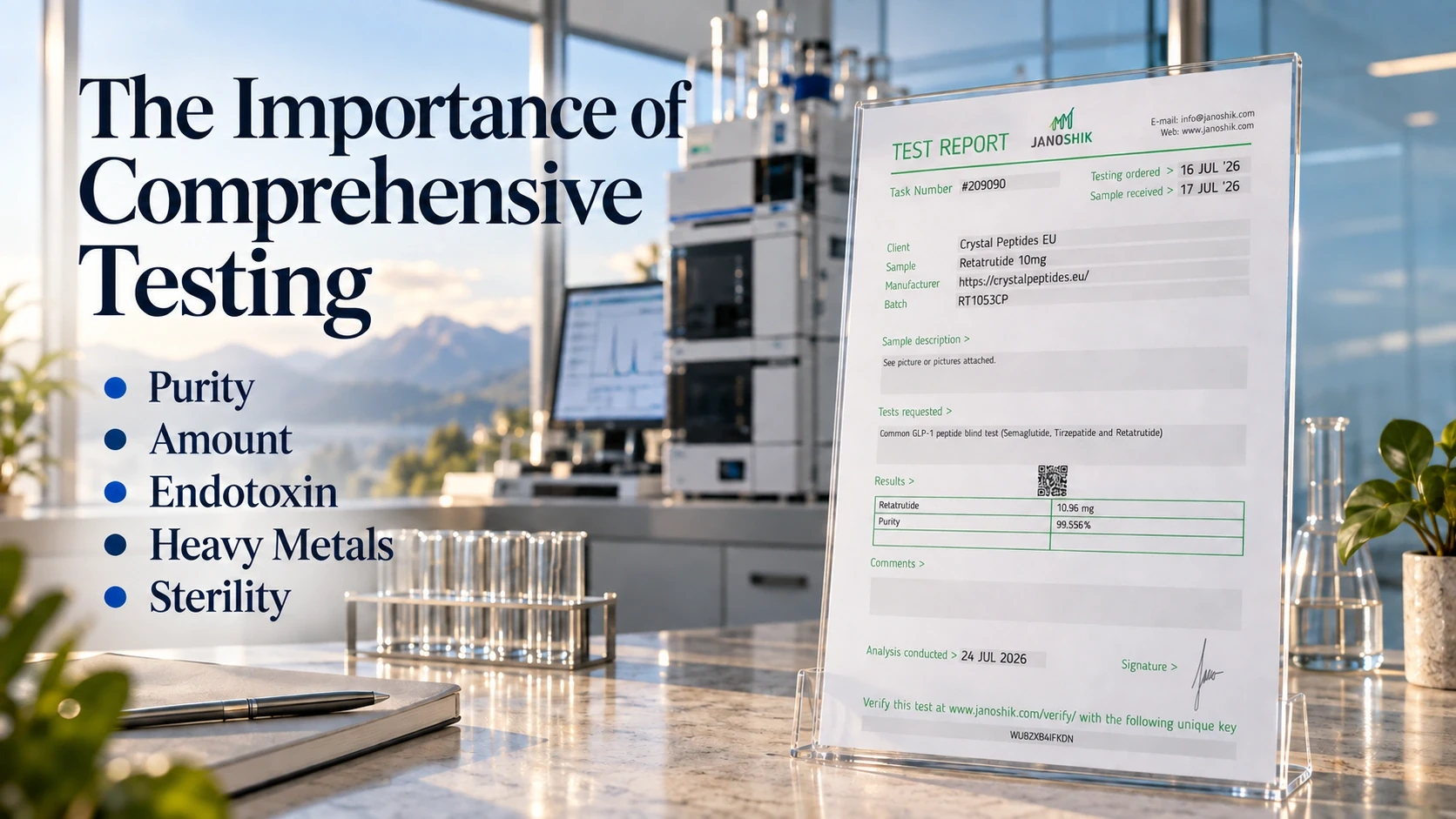
Likewise, chromatographic area percentage is not capsule content or proof of identity. Testing must use a method suited to the question, as explained in the peptide testing guide.
Closing the shell does not establish delivery
Shell opening, release of the fill and dissolution are separate events. Dissolution does not establish passage through the intestinal barrier, and a possible local gut effect is not evidence of systemic absorption. The capsule mechanism guide examines those distinctions in more detail.
A manufacturing result also describes a product at the time tested, not indefinitely. Moisture sensitivity, packaging and changes during storage require formulation-specific evidence. The capsule storage guide addresses that separate question; neither an intact shell nor an unchanged appearance establishes a universal shelf life.
Research Disclaimer
This article is for informational and research purposes only. The content is not intended as medical advice, diagnosis, or treatment recommendation.