GHK-Cu: Copper Peptide in Anti-Aging Research
What is GHK-Cu?
GHK-Cu (Glycyl-L-Histidyl-L-Lysine Copper) is a naturally occurring copper-binding tripeptide found in human plasma, saliva and urine. GHK-Cu has been investigated in fibroblast cultures and animal wound models. These findings help define questions about connective-tissue biology, but they do not establish that every formulation containing GHK-Cu produces the same outcome in humans. Primary rat wound study.
Mechanism of Action
GHK-Cu's remarkable properties stem from its ability to modulate gene expression:
- Gene regulation: Studies show GHK-Cu can reset the activity of 4,000+ genes to a healthier pattern, suppressing genes associated with disease and activating those involved in repair.
- Collagen synthesis: Stimulates production of collagen types I, III, and V, as well as elastin and proteoglycans.
- Antioxidant defense: Upregulates superoxide dismutase (SOD) and other antioxidant enzymes.
- Anti-inflammatory: Reduces NF-κB signaling and pro-inflammatory cytokines like IL-6 and TNF-α.
Research Applications
Skin Regeneration
- Increases skin thickness and elasticity
- Reduces fine lines and photoaging damage
- Accelerates wound healing and reduces scarring
- Promotes hair follicle growth
Tissue Remodeling
- Stimulates decorin production for tissue architecture
- Attracts immune cells for controlled repair
- Promotes nerve regeneration
- Supports bone density maintenance
Systemic Anti-Aging
- Protects lung tissue from fibrosis
- Reduces liver damage markers
- Supports cardiovascular tissue integrity
Delivery Methods
- Subcutaneous: For systemic distribution and deep tissue effects
- Nasal spray: Being studied for potential CNS and systemic delivery
- Topical: Common in cosmetic research for skin applications
Conclusion
GHK-Cu is studied for its copper-binding chemistry and its effects in connective-tissue models. For a structural comparison with the closely related copper tripeptide AHK-Cu, see GHK-Cu and AHK-Cu. Cell and animal findings describe research questions rather than demonstrated clinical rejuvenation.
Explore the Products from This Article
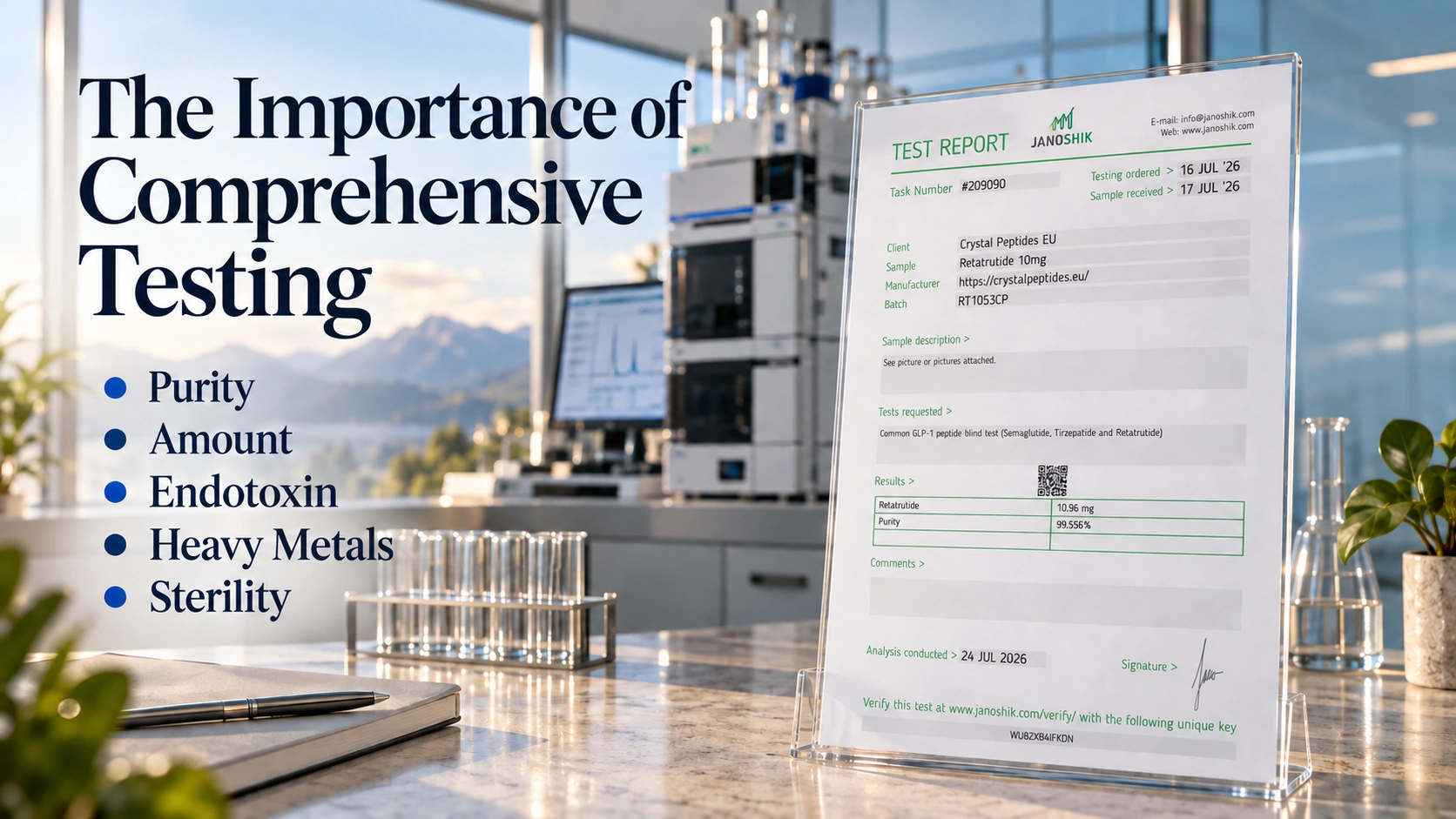
All products are >99% purity, manufactured in a certified EU laboratory, with accompanying lab analysis.
Research Disclaimer
This article is for informational and research purposes only. The content is not intended as medical advice, diagnosis, or treatment recommendation.