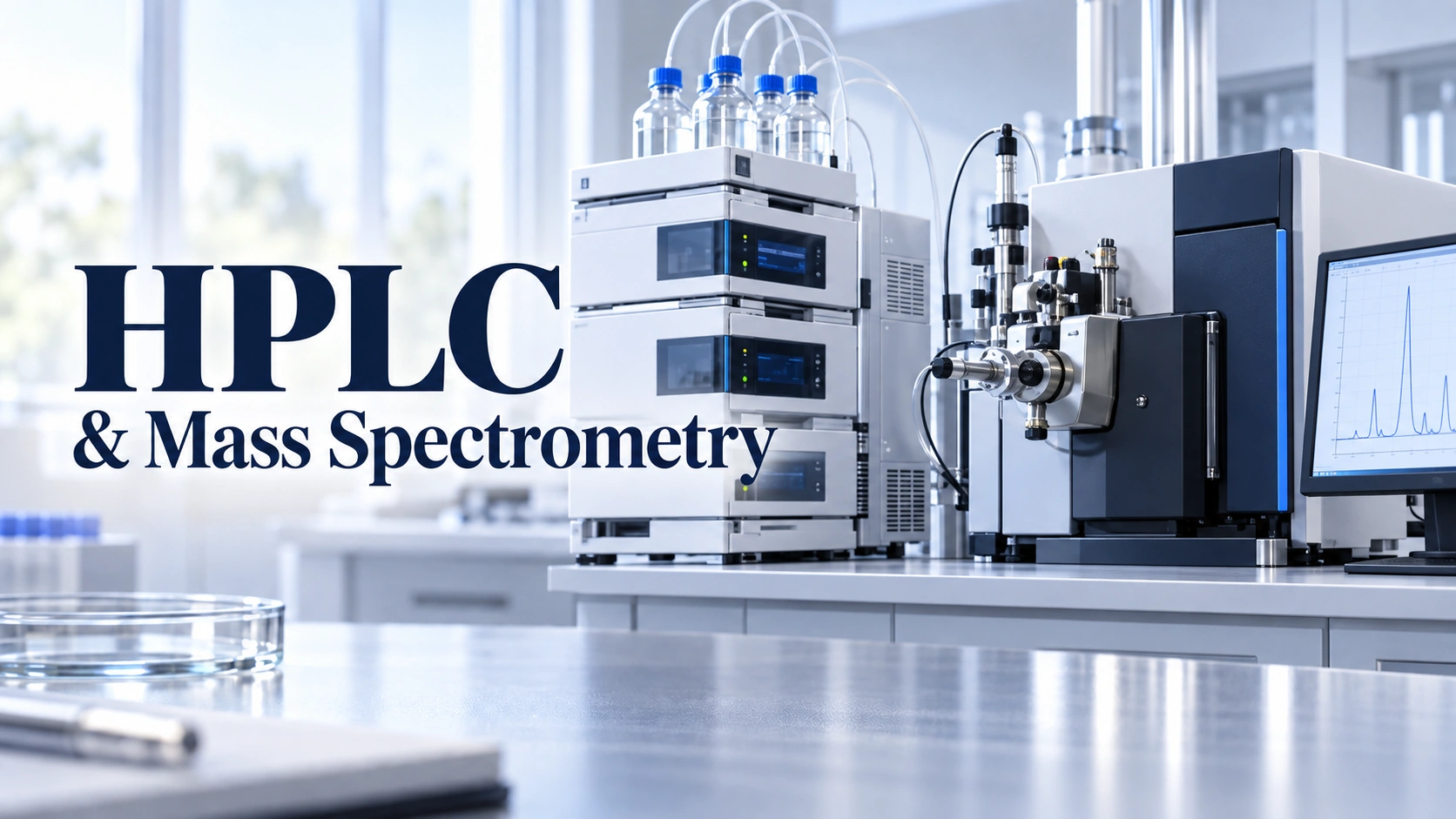
Why Purity Matters: HPLC & Mass Spectrometry
Why Purity Matters in Peptide Research
In peptide research, purity isn't just a quality metric — it's the foundation of reliable, reproducible results. Impurities can introduce confounding variables, cause unexpected biological responses, and invalidate research conclusions.
Testing Methods
High-Performance Liquid Chromatography (HPLC)
HPLC is the gold standard for peptide purity analysis:
- How it works: The peptide sample is dissolved in a mobile phase and passed through a column packed with stationary phase material. Different components separate based on their interaction with the column.
- What it measures: Purity percentage (area under the main peak vs. total area), retention time, and impurity profile.
- Standard threshold: Research-grade peptides should be ≥98% pure by HPLC.
Mass Spectrometry (MS)
Mass spectrometry confirms the peptide's molecular identity:
- How it works: The peptide is ionized and its mass-to-charge ratio is measured precisely.
- What it confirms: Molecular weight matches the target sequence, absence of truncated sequences, and post-translational modifications.
- ESI-MS vs MALDI-TOF: Two common ionization methods used in peptide analysis.
Reading a Certificate of Analysis (COA)
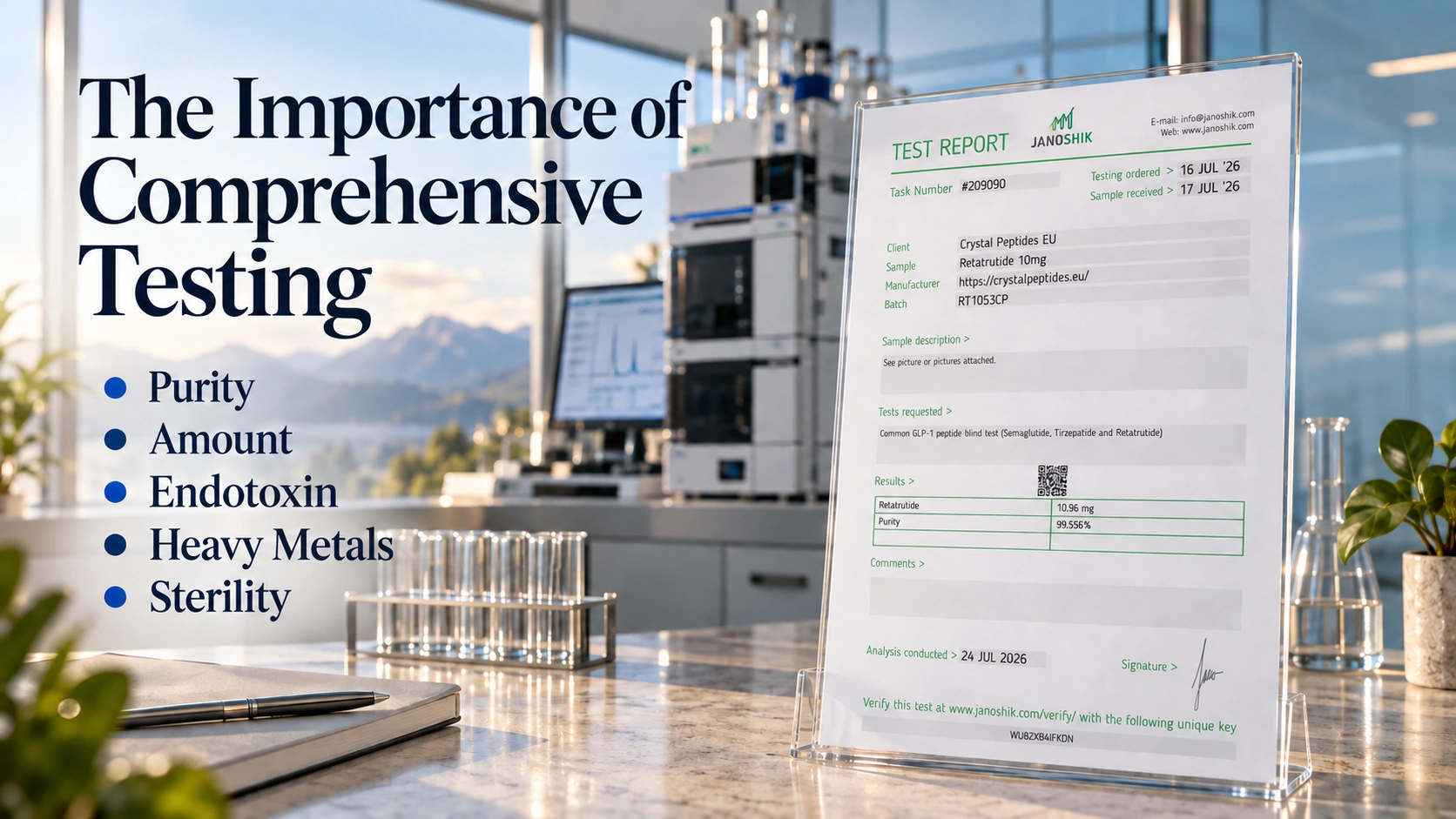
A proper COA should include:
- Product identification: Peptide name, batch number, quantity
- HPLC purity: Typically shown as a percentage with the chromatogram
- MS data: Observed molecular weight vs. theoretical
- Appearance: Physical description (powder color, form)
- Solubility: Recommended reconstitution solvents
- Storage conditions: Temperature and light sensitivity requirements
Third-Party Testing: Why It Matters
Independent laboratory testing by recognized facilities (like Janoshik Analytical) provides:
- Unbiased verification of manufacturer claims
- Detection of contaminants not tested by the manufacturer
- Published, verifiable results that can be independently confirmed
- Batch-specific data rather than generic specifications
Crystal Peptides' Testing Standards
All Crystal Peptides products undergo:
- In-house HPLC analysis for every batch
- Third-party testing by Janoshik Analytical
- Published COAs available on the website
- Purity guarantee of 99%+ for all products
Conclusion
Understanding purity testing empowers researchers to make informed decisions about their peptide sources. Always request and verify COAs before using peptides in any research protocol.
Research Disclaimer
This article is for informational and research purposes only. The content is not intended as medical advice, diagnosis, or treatment recommendation.