Melanotan MT-1 vs MT-2: Structure, Evidence and Regulatory Status
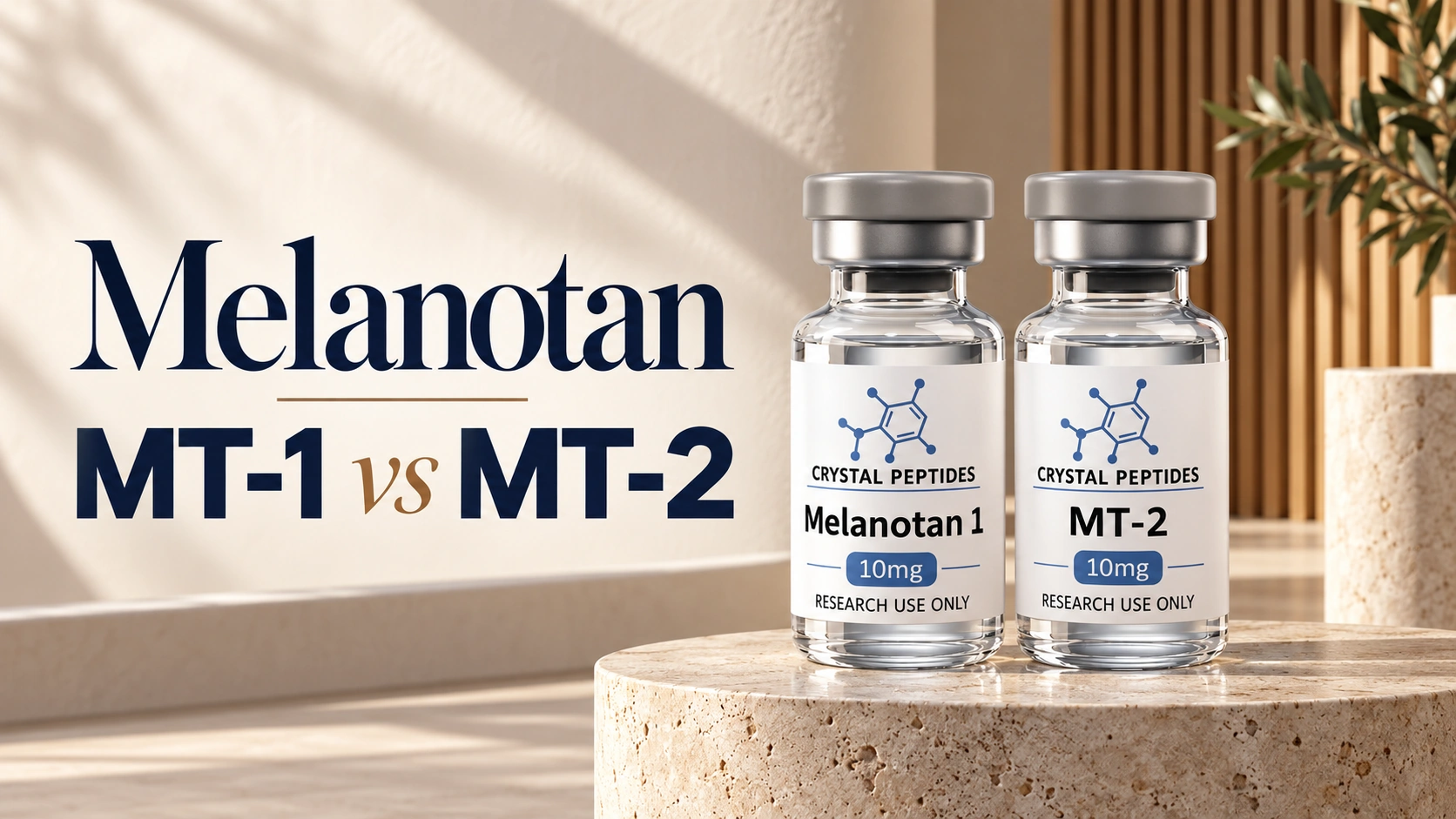
Names can mislead. MT-1 and MT-2 sound like two versions of one product, and that is the first thing worth correcting. Both grew out of research on alpha-melanocyte-stimulating hormone (alpha-MSH), but changing a peptide's structure changes how it meets its receptors — and changes the questions a researcher can ask with it.
So the useful comparison is not "which one tans harder". It is how the molecules differ, what their studies actually measured, and why the clinical history of one cannot be handed over to the other.
The short answer
- MT-1, usually associated with Melanotan I or afamelanotide, is a linear peptide of 13 amino acids. MT-2 is a smaller cyclic peptide of seven amino acids.
- Both sit inside melanocortin research. Afamelanotide's clinical pigmentation mechanism centres on MC1R, while MT-2 shows broader melanocortin activity. "Predominantly" is not "exclusively".
- Afamelanotide is the active substance of one specific medicine, Scenesse. That does not turn a research vial labelled MT-1 into an approved medicine, and it says nothing about the safety of MT-2.
The shared starting point in biology
A receptor is a protein that answers a molecular signal. The melanocortin family contains several receptor subtypes with different biological jobs. MC1R matters most in the signalling that regulates eumelanin, the brown-black form of melanin.
That is why alpha-MSH analogues drew interest in the first place: pigmentation could be studied by changing the signal instead of treating skin colour as an isolated outcome. A shared receptor family, however, does not mean identical actions. Structure, receptor subtype, experimental concentration and biological model all steer the result.
One naming trap deserves a warning of its own: Melanotan I and II are not the MT1 and MT2 melatonin receptors. Melatonin belongs to a different signalling system entirely. Similar abbreviations should not merge sleep research with melanocortin pharmacology.
MT-1: a linear analogue with a specific clinical history
Afamelanotide is a modified alpha-MSH analogue. Its linear chain holds 13 amino acids, with substitutions that separate it from the natural hormone. EMA product information describes predominant binding to MC1R, while the public assessment report also discusses activity involving other melanocortin receptors. Calling it absolutely MC1R-exclusive would flatten that pharmacology. EMA product information.
Its clinical development focused on erythropoietic protoporphyria (EPP), a rare condition marked by painful light sensitivity. Randomized trials evaluated afamelanotide implants in that defined patient population and measured outcomes tied to light exposure and quality of life. These were not trials of a general cosmetic tanning treatment. Randomized EPP trials.
The line between a molecule and a finished medicine matters here. The EU authorisation for Scenesse covers a specific implant, a specific indication and a supervised treatment setting. It does not travel automatically to every material sold as "MT-1" or "afamelanotide". EMA Scenesse overview.
MT-2: a cyclic structure and a broader question
Melanotan II is a cyclic heptapeptide: its seven amino acids are closed into a ring rather than reproducing the longer linear analogue. Its broader melanocortin activity made it interesting beyond pigmentation, including responses linked to other melanocortin pathways.
A small early phase-I pilot reported pigmentation changes alongside effects such as nausea, stretching and yawning, and erections. That is informative historical evidence, but a pilot cannot establish long-term safety, weigh all relevant risks, or predict what an untested retail formulation will do. Dorr and colleagues, 1996.
The methodological lesson is the important one: observing several effects fits a broader biological profile. It is not proof that the molecule is more useful, more effective or safer overall.
MT-1 and MT-2 side by side
| Comparison point | MT-1 / afamelanotide | MT-2 / Melanotan II |
|---|---|---|
| Structure discussed here | Linear peptide; 13 amino acids | Cyclic peptide; seven amino acids |
| Main explanatory focus | MC1R-related eumelanin signalling | Broader melanocortin signalling |
| Human evidence highlighted | Trials of afamelanotide implants in EPP | Small historical pilot studies |
| Regulatory distinction | Scenesse is a specifically authorised medicine | The cited pilot does not establish an authorised tanning treatment |
| Key interpretation limit | Clinical results do not transfer to research vials | Pigmentation observations do not establish long-term safety |
| Question the comparison cannot settle | A universal ranking of cosmetic benefit or safety | A universal ranking of cosmetic benefit or safety |
Why "stronger" and "safer" are incomplete claims
Stronger at which endpoint, in which model, over what period? A receptor experiment, a measured change in pigmentation and a patient-reported symptom are three different measurements. Lining up percentages from unrelated studies is not a substitute for a well-designed direct comparison.
Safety deserves the same caution. The clinical monitoring and manufacturing controls that surround an authorised implant are part of its evidence context, and none of that can be assumed for a research material bought online. Nor does the absence of a reported problem in a small study show that an uncommon or delayed problem cannot occur.
Pigment changes need careful reading too. Darkening of existing skin lesions is a safety observation — not a diagnosis, and not on its own proof of a causal link to melanoma. Both extremes are wrong: calling a product harmless, or claiming that one report proves it causes cancer. The UK regulator MHRA has warned about potentially serious effects from Melanotan II injections and nasal sprays. MHRA statement.
Frequently asked questions
Is MT-1 simply a milder MT-2?
No. They are structurally different analogues with different pharmacology and different evidence histories. "Milder" compresses separate questions about receptor activity, formulation and safety into one unsupported label.
Does the Scenesse approval mean MT-1 research vials are approved?
No. Approval belongs to the specific medicinal product and its conditions of use. A shared molecule name is not evidence of equivalent manufacturing, formulation, clinical performance or regulatory status.
Can pigmentation replace sun protection?
No such conclusion follows from the studies discussed here. Findings inside a defined EPP treatment programme are not an instruction to increase UV exposure or to drop established protective measures.
Is there evidence that combining MT-1 and MT-2 is better?
The sources discussed here establish neither a clinical advantage nor a safety profile for that combination. Related mechanisms are not evidence of an effective or safe combined intervention.
The takeaway
MT-1 and MT-2 are best understood as related molecules with different structures and different evidence trails. A good comparison keeps those trails visible: what the molecule is, which receptors and models were studied, and what the findings can reasonably support. It does not convert a shared category into a treatment recommendation.
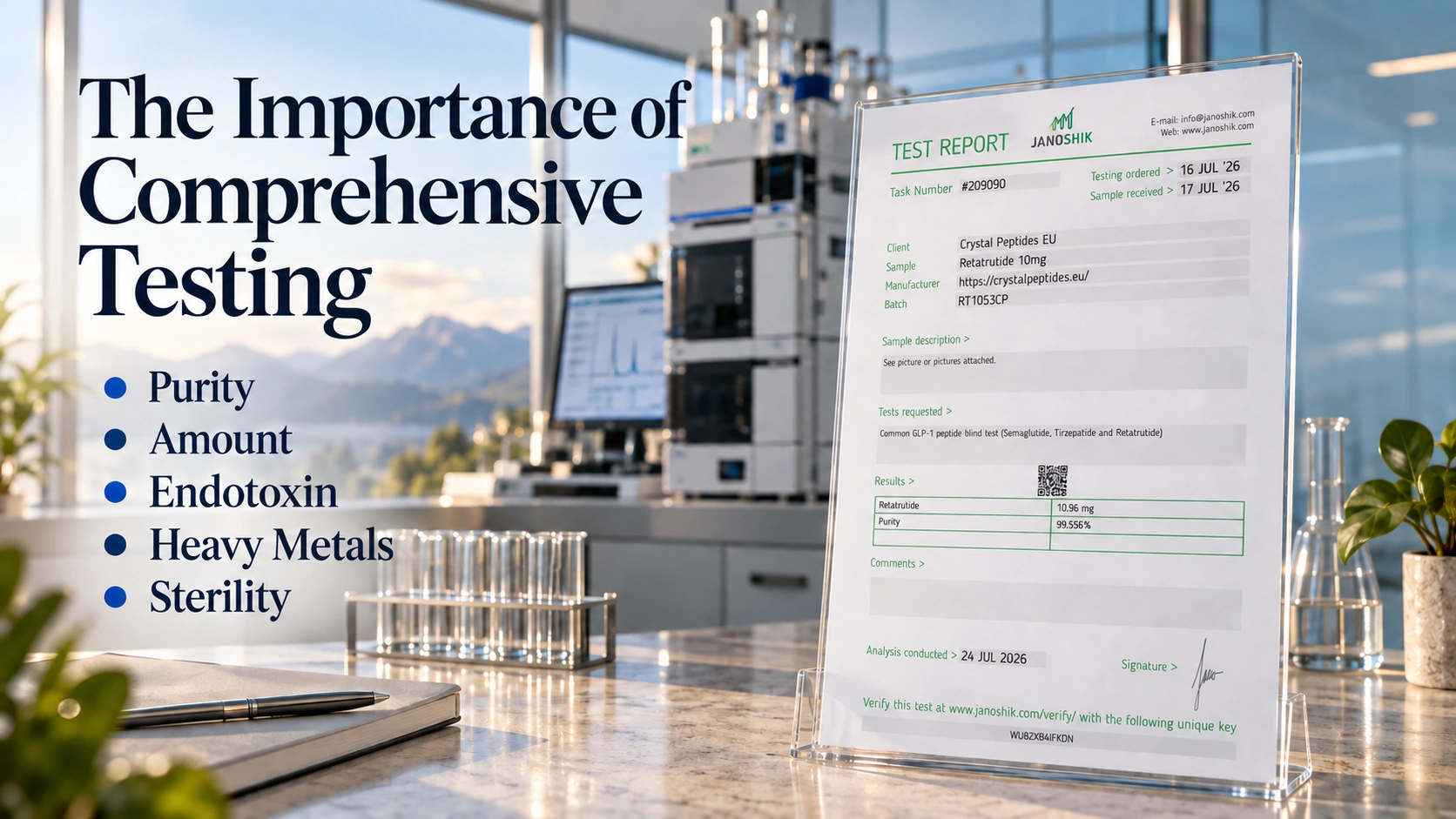
For another case where similar names hide important differences, read our comparison of GHK-Cu and AHK-Cu. For judging the material behind an experiment, see HPLC, mass spectrometry and peptide quality.
This article is educational. Crystal Peptides research materials are not presented here as medicines or as products for human use.
Sources
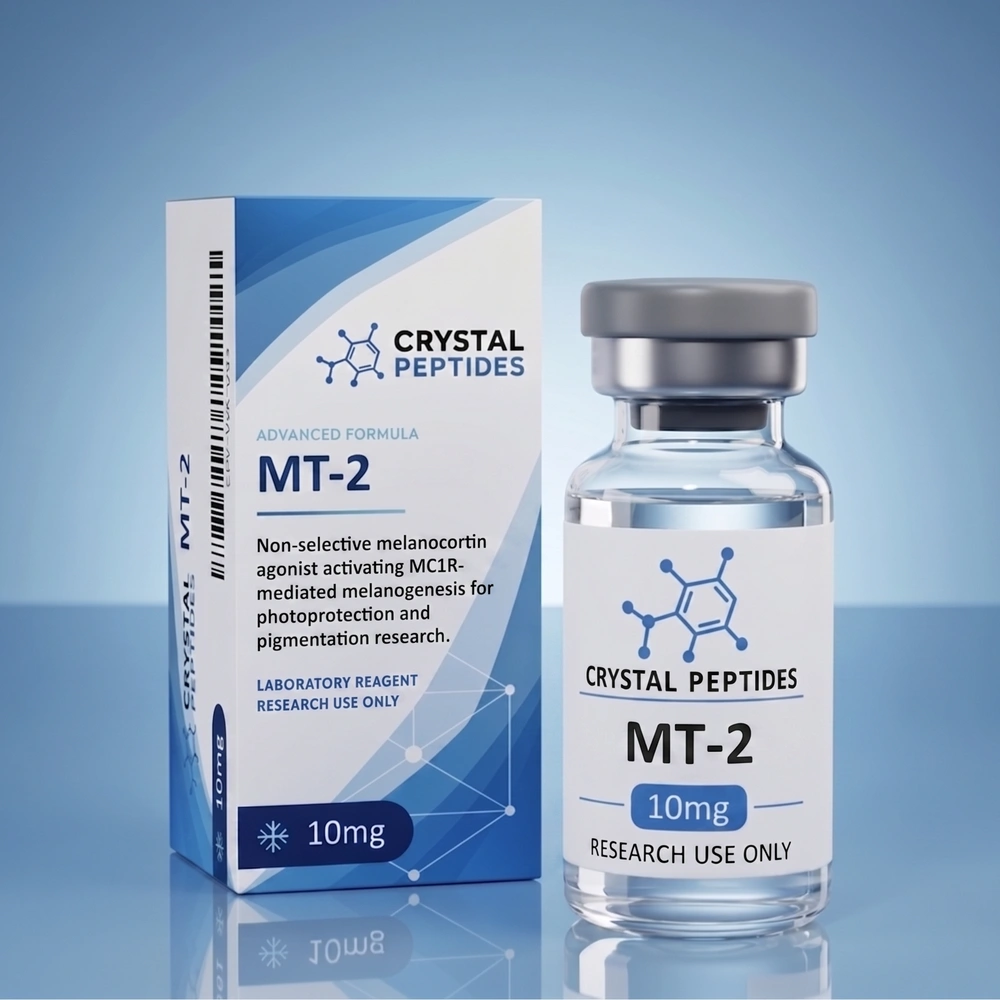
Explore the Products from This Article
All products are >99% purity, manufactured in a certified EU laboratory, with accompanying lab analysis.
Research Disclaimer
This article is for informational and research purposes only. The content is not intended as medical advice, diagnosis, or treatment recommendation.