

KLOW Peptide Blend (80mg)
80mg
❄️Lyophilized powder (not reconstituted)
116.97 GBP
Total: 116.97 GBP
Discount per Quantity
| Quantity | Discount | Price per Unit |
|---|---|---|
| 5 - 9 | 10% | 105.28 GBP |
| 10 - 19 | 20% | 93.58 GBP |
| 20+ | 30% | 81.88 GBP |
Rigorous third-party testing
Every batch of our research chemicals and peptides undergoes independent third-party laboratory testing for purity and identity.
Total: 116.97 GBP
Ships Monday, Nov 16
Cutoff 3:00 PM EET
Arrives Thu, Nov 19 – Mon, Nov 23
Free shipment protection
Lost or damaged parcels are replaced — refunded in full if a second one fails
Express 1–3 day delivery
Available at checkout
What Is KLOW Peptide Blend?
KLOW peptide blend is a research formulation consisting of four peptides: BPC-157, TB-500, GHK-Cu and KPV. Each is investigated for its distinct role in cellular signalling, tissue biology, and inflammatory pathways. Their combination in the KLOW blend provides a potential subject for research into the molecular properties of the individual components and their behaviour within the combined formulation.
You can now buy KLOW Peptide Blend (80mg) from Crystal Peptides in the UK and EU at competitive prices, with a Certificate of Analysis (CoA) available for every product batch. Testing is conducted by independent laboratories such as Janoshik to assess identity, purity and other applicable quality parameters, as documented in the relevant batch report. Crystal Peptides offers secure, discreet shipping and quantity-based discounts to help you get better value on larger orders.
KLOW Peptide Blend is intended exclusively for qualified laboratory research and is not for human or veterinary use.
What's Included?
KLOW Peptide Blend (80mg) is supplied as a lyophilised powder in a sealed glass vial. This formulation consists of BPC-157 (~10mg), TB-500 (~10mg), GHK-Cu (~50mg) and KPV (~10mg), with a total nominal peptide content of 80mg per vial. This composition can vary slightly, so be sure to check what CoA for the exact amount of each peptide.
Crystal Peptides provides batch-specific Certificates of Analysis (CoAs) on the product page or the dedicated Lab Tests page where you can find the latest report for the current batch. Depending on the report, analytical documentation may include results for:
- Identity: Analytical evidence supporting the identification of the tested material.
- Purity: Chromatographic assessment of the principal detected component and related impurities.
- Additional quality parameters: Where reported, testing may cover endotoxins, sterility and specified elemental contaminants.
Note that a purity result for a sample does not necessarily confirm the identity or individual quantity of every peptide in the blend, nor does it establish sterility or biological activity.
This product is supplied in lyophilised powder form. Lyophilisation removes water from the prepared material under controlled conditions, producing a dry format that supports product stability during storage and transport. For reconstitution, you can also order Bac Water (10mL) or Acetic Acid 0.6% Mixing Water from Crystal Peptides to be delivered with your order.
KLOW Peptide Blend: Technical Specifications
KLOW Peptide Blend is a multi-component research formulation containing BPC-157, TB-500, GHK-Cu and KPV.
Property | ||||
Full name | Body Protection Compound-157 | Thymosin β4 fragment (Ac-LKKTETQ) | Glycyl-L-histidyl-L-lysine copper complex | Lysyl-prolyl-valine |
Alternate names | BPC-157, Bepecin | TB-500, TB-500 fragment | Copper tripeptide-1, GHK-Cu | α-MSH(11–13), MSH(11–13) |
Molecular class | Synthetic pentadecapeptide | Synthetic heptapeptide fragment* | Copper-binding tripeptide complex | Synthetic tripeptide |
Amino acid sequence | GEPPPGKPADDAGLV | Ac-LKKTETQ | GHK (glycine–histidine–lysine), complexed with copper | KPV (lysine–proline–valine) |
Number of amino acids | 15 | 7 | 3 | 3 |
Molecular formula | C62H98N16O22 | C38H68N10O14 | C28H48CuN12O8 | C16H30N4O4 |
Average molecular mass | 1,419.5 g/mol | ~889.0 g/mol | ~744.3 g/mol | ~342.43 g/mol |
CAS Registry Number | 137525-51-0 | 885340-08-9 | 300801-03-0 | 67727-97-3 |
PubChem CID | ||||
Parent molecule or origin | Synthetic fragment derived from a protein associated with gastric tissue | Fragment corresponding to residues 17–23 of thymosin β4 | GHK tripeptide coordinated with copper | C-terminal tripeptide of α-melanocyte-stimulating hormone |
Product quantity in KLOW | Confirm in CoA | Confirm in CoA | Confirm in CoA | Confirm in CoA |
Note that these specifications are a summary of registry data for the four compounds. For the exact identities and forms supplied in the Klow blend by Crystal Peptides, check the provided Certificate of Analysis (CoA).
TB-500*: The molecular data in the table apply to the N-acetylated seven-amino-acid fragment Ac-LKKTETQ. The name TB-500 is also used for full-length thymosin β4, which contains 43 amino acids and has a molecular mass of approximately 4,963 g/mol. These are different molecular entities, so the product's exact sequence and terminal modifications should be confirmed from the CoA.
KLOW Peptide Blend: Overview and Research Background
The component peptides of the KLOW blend have attracted scientific interest through their separate lines of research into cellular repair processes, cytoskeletal regulation, extracellular matrix remodelling and inflammatory signalling.
Since each has a different molecular structure and research history, the evidence supporting one component should not be taken to also apply to the others or to the combined blend.
BPC-157: Gastric Peptide Research and Cellular Repair
BPC-157, short for Body Protection Compound-157, is a synthetic pentadecapeptide associated with research into gastric cytoprotection and tissue biology. Its research history dates to the early 1990s, when investigators studying gastric juice and protective mechanisms in the gastrointestinal tract characterised a 15-amino-acid fragment associated with the broader body-protection compound research programme. The peptide subsequently became the subject of extensive preclinical investigation into its biological activity across different tissue models.
Research has examined BPC-157 in experimental models involving tendon, ligament, muscle, gastrointestinal and other tissues. Investigated endpoints include fibroblast activity, collagen-related processes, vascular responses and signalling pathways associated with tissue integrity. These studies have generated interest in how the peptide interacts with multiple biological systems, although its complete mechanism of action remains unresolved. [1]
For laboratory research, BPC-157 is relevant to investigations of cellular responses following tissue injury, interactions between vascular and connective-tissue processes, and the molecular pathways involved in maintaining tissue structure. Much of the available evidence remains preclinical, and the findings do not establish equivalent effects or safety in humans. [2]
TB-500: Thymosin Beta-4 and Cytoskeletal Research
TB-500 is commonly associated with thymosin beta-4 (Tβ4), a naturally occurring 43-amino-acid peptide involved in actin regulation. Actin is a major component of the cellular cytoskeleton, which helps maintain cell structure and supports processes such as movement, division and changes in cell shape. Research into thymosin beta-4 has therefore examined how actin-binding activity relates to cell migration, vascular development and tissue remodelling. [3]
Studies of thymosin beta-4 have identified functionally important peptide regions, including sequences associated with actin binding and cellular migration. This work has contributed to investigations of cytoskeletal dynamics, angiogenesis and cellular responses in experimental tissue-repair models. [4]
In the KLOW blend, TB-500 provides a research connection to actin-related processes, cell migration and cytoskeletal regulation, but the actual contribution depends on the identity of the mode of research and what exact TB-4 fragment is present in the formulation.
GHK-Cu: Copper Binding and Extracellular Matrix Remodelling
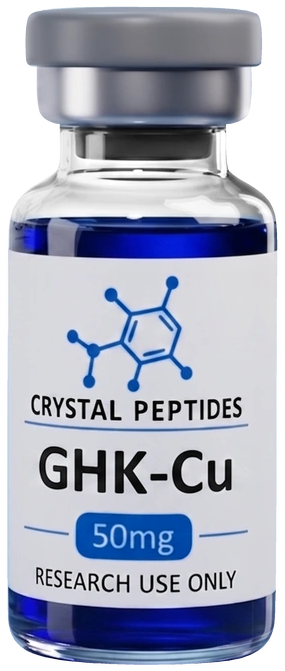
GHK-Cu is a copper complex of glycyl-L-histidyl-L-lysine (GHK), a naturally occurring tripeptide identified in human biological fluids. The peptide binds copper ions, forming a complex investigated for its interactions with cellular processes involved in tissue maintenance and remodelling. [5]
Research into GHK-Cu has examined extracellular matrix components, including collagen and glycosaminoglycans, alongside fibroblast activity and the expression of genes associated with tissue structure. An influential experimental study published in 1993 investigated the copper–tripeptide complex in a rat wound model and reported changes in extracellular matrix accumulation, including collagen and glycosaminoglycan content. [6]
Subsequent research has explored the broader molecular interactions of GHK and its copper complex, including the regulation of matrix metalloproteinases and their inhibitors. These enzymes help control the breakdown and remodelling of extracellular matrix components, making them relevant to studies of tissue structure and cellular responses to changes in the surrounding environment. [7]
For laboratory researchers, GHK-Cu is relevant to studies examining copper–peptide interactions, extracellular matrix regulation and fibroblast-associated processes. Its inclusion in the KLOW blend introduces a distinct research dimension from the actin-related focus of thymosin beta-4 research and the gastric-peptide research associated with BPC-157.
KPV: A Short Peptide Studied in Inflammatory Signalling
KPV is a tripeptide consisting of lysine, proline and valine. It corresponds to the C-terminal three-amino-acid sequence of alpha-melanocyte-stimulating hormone (α-MSH), a peptide derived from proopiomelanocortin that has been studied for its roles in pigmentation and inflammatory regulation.
Researchers became interested in KPV because experimental work suggested that certain biological activities of α-MSH could be investigated using shorter peptide fragments. Studies subsequently examined KPV in models of inflammation, including experiments investigating inflammatory-cell migration and responses to inflammatory mediators. [8]
A 2003 study compared KPV with other melanocortin-related peptides in experimental inflammation models. The research findings suggested that KPV's effects were not simply explained by the canonical melanocortin-receptor signalling associated with α-MSH, highlighting the need to investigate its molecular interactions separately. [9]
KPV is therefore relevant to research into inflammatory signalling, cytokine-related responses and interactions between short peptides and cellular inflammatory processes. However, the mechanisms underlying its observed effects remain incompletely characterised, and findings from isolated-compound experiments cannot establish how KPV behaves when combined with other peptides.
KLOW Peptide Blend: Four Peptides in One Formulation
The rationale for investigating KLOW lies in its combination of four compounds associated with different aspects of cellular biology. As we have just seen, the wide range of research interests involved makes the formulation relevant to questions about the behaviour of multiple peptide-based compounds within a single preparation.
However, the scientific rationale for combining these components is distinct from evidence demonstrating that the combination produces a particular biological effect. Research on the individual compounds does not establish whether the components remain stable together, whether they interact chemically or biologically, or whether the combined formulation produces additive, overlapping or opposing effects. These questions require direct investigation of the specified blend using appropriate analytical methods and experimental models.
For researchers evaluating KLOW, the most important considerations are therefore the verified identity and quantity of each component, the analytical characteristics of the finished formulation, and the availability of evidence specific to the combination. Findings should be interpreted according to the exact material tested, the experimental model and the measured endpoints rather than extrapolated from studies of the individual peptides.
KLOW Peptide Blend is supplied exclusively for qualified laboratory research and is not for human or veterinary use.
KLOW Peptide Blend: Research Applications
Research involving the individual components in KLOW blend spans several areas of experimental biology, including extracellular matrix remodelling, cellular migration, tissue responses and inflammatory signalling. These overlapping research themes provide a basis for investigating the compounds individually and examining how their molecular properties behave in a combined formulation.
However, the evidence base needs to be interpreted carefully. Most findings involving GHK-Cu, BPC-157, TB-500 and KPV come from laboratory or animal studies. The findings described below concern the individual compounds unless otherwise stated; they do not establish the biological activity, safety or efficacy of KLOW as a complete blend.
Extracellular Matrix Remodelling and Tissue Biology
The extracellular matrix (ECM) is a network of proteins and other molecules that provides structural support to cells and influences their behaviour. Its composition changes in response to developmental signals, mechanical stress and tissue injury. Researchers investigate these changes by examining collagen organisation, matrix-degrading enzymes, fibroblast activity and the expression of genes involved in maintaining tissue structure.
GHK-Cu is relevant to this field because experimental studies have examined its relationship with collagen production, glycosaminoglycans and matrix-remodelling processes. BPC-157 has also been investigated in experimental models involving tendons and other connective tissues, with researchers measuring structural and histological changes. [5]
For research in the KLOW blend, GHK-Cu research provides several distinct questions: whether the individual compounds influence similar ECM-related endpoints, whether their observed effects involve different molecular pathways, and whether the combined material behaves consistently with its specified composition.
In this context, useful experimental endpoints may include collagen organisation, fibroblast activity, matrix metalloproteinase expression and histological assessment of tissue architecture.
Cellular Migration and Cytoskeletal Regulation
Cell migration is important in numerous biological processes, including tissue development, immune-cell movement and responses to cellular damage. It depends on coordinated changes in the cytoskeleton, cell adhesion and intracellular signalling.
Thymosin beta-4 research has examined actin binding and the regulation of cellular movement. The relevance of this literature to TB-500 depends on the exact molecular form being studied, as most research currently refers to the full-length thymosin beta-4, not the shorter TB-500 fragment. [10] However, researchers often attribute TB-4 research to TB-500 because it represents the active region of the full tb-4 protein.
BPC-157 has also been investigated in experimental models involving fibroblast behaviour, vascular responses and signalling associated with tissue integrity. These areas provide a basis for studying cellular migration alongside other measures of tissue biology, without assuming that the compounds act through identical mechanisms. [11]
Researchers investigating these questions may examine cell-migration assays, cytoskeletal organisation, adhesion-related markers and relevant signalling proteins. Appropriate controls are important because changes in cell number, viability or proliferation can influence migration measurements and complicate interpretation.
Inflammatory Signalling and Cellular Responses
Inflammatory signalling involves networks of cytokines, intracellular mediators and regulatory proteins that coordinate cellular responses to environmental or biological stimuli. Researchers study these pathways to understand how cells respond to inflammatory challenges and how those responses vary across experimental conditions.
KPV, a short peptide derived from the C-terminal region of alpha-melanocyte-stimulating hormone, has been investigated in cellular and animal models of inflammation. Studies have explored its relationship with inflammatory mediators and responses in experimental intestinal inflammation. [12] However, its precise molecular interactions remain incompletely characterised.
This research area offers a different perspective from investigations of ECM structure or cytoskeletal dynamics. Researchers can examine whether inflammatory markers change alongside other cellular endpoints, while avoiding the assumption that observations from one experimental model apply to another.
Relevant measurements in this area of research include cytokine expression, inflammatory signalling markers, cell viability and changes in tissue or cellular morphology. Using multiple complementary endpoints can help distinguish a specific pathway-related observation from a general change in cellular condition.
Copper–Peptide Interactions and Molecular Characterisation
GHK, the tripeptide glycyl-L-histidyl-L-lysine, binds copper(II) ions through specific coordination sites involving its peptide backbone and histidine residue. Factors such as pH, the concentrations of available ligands and the presence of other copper-binding molecules can influence metal coordination and the distribution of chemical species in solution. For example, some studies have characterised interactions between GHK-Cu and additional ligands, demonstrating that the complex can participate in more than one coordination environment under appropriate conditions. [2,3]
Investigating the Combined KLOW Formulation
The central research question for KLOW blend is whether combining BPC-157, TB-500, GHK-Cu and KPV produces measurable properties that differ from those observed with the individual components. This is a formulation-specific question, and it cannot be answered by combining conclusions from separate studies of the four compounds.
The four-component KLOW blend raises further questions that the two-compound study cannot resolve. These include the stability of the individual constituents within the formulation, potential chemical interactions, the consistency of component ratios and whether measurements obtained from the combined material can be attributed to particular constituents.
A rigorous investigation of the complete blend would therefore need to establish the material's identity and composition, use appropriate controls, and compare blend-specific observations with relevant individual-component results. The choice of endpoints would depend on the research question rather than on the number of compounds present.
KLOW Blend vs GLOW Blend vs BPC-157 + TB-500 Combo
The KLOW blend, GLOW blend, and BPC-157 + TB-500 blend are all multi-component research formulations with different compositions and analytical considerations.
Research parameter | KLOW Peptide Blend | ||
Number of components | Four | Three | Two |
Composition | GHK-Cu, BPC-157, TB-500 and KPV | GHK-Cu, BPC-157 and TB-500 | BPC-157 and TB-500 |
Commonly listed component quantities | GHK-Cu 50mg, BPC-157 10mg, TB-500 10mg, KPV 10mg | GHK-Cu 50mg, BPC-157 10mg, TB-500 10mg | BPC-157 5mg or 10mg, paired with the same quantity of TB-500 |
Additional research dimension | Inflammatory signalling associated with KPV | Copper–peptide interactions and extracellular matrix biology | Focused investigation of two distinct peptide components |
Main interpretive challenge | Distinguishing individual-component effects from blend-level effects | Separating GHK-Cu-related observations from those involving BPC-157 and TB-500 | Determining whether observations reflect either peptide or their combination |
In short, KLOW differs from GLOW through the inclusion of KPV, while the BPC-157 + TB-500 blend provides a more limited two-component composition. Those differences define the materials that researchers are evaluating, but they do not establish comparative efficacy, synergy or suitability for a particular experimental application.
All three formulations should be assessed using their exact product specifications and relevant batch documentation. They are supplied for qualified laboratory research only and are not for human or veterinary use.
KLOW Peptide Blend Storage and Handling
KLOW Peptide Blend (80mg) is supplied as a lyophilised powder, a dry format produced through freeze-drying. Appropriate storage and handling practices help protect the material from moisture, excessive heat, light exposure and contamination during laboratory work.
Because the Klow blend is a multi-component formulation, its storage requirements should be established from the product's approved specification and supporting stability data. The formulation contains GHK-Cu, BPC-157, TB-500 and KPV, so the characteristics of these individual compounds provide useful context for handling the blend.
Storage of Lyophilised KLOW
- Follow the specified storage temperature: Use the temperature range stated in the product documentation. Refrigerated or frozen storage may be appropriate for some lyophilised research peptides.
- Protect against moisture: Keep the vial sealed until the material is required for laboratory work. Lyophilised powders can absorb moisture when exposed to humid air, potentially affecting their physical and chemical stability.
- Limit light and heat exposure: Store the material in its original packaging, away from direct sunlight and unnecessary heat. This is particularly relevant since the formulation contains GHK-Cu, a copper–peptide complex whose chemical properties depend on the integrity of its copper coordination.
- Maintain batch traceability: Retain the original label, batch number and associated Certificate of Analysis (CoA). These details help link the material to its documented identity and quality parameters.
- Avoid unnecessary temperature fluctuations: Repeated changes in temperature can increase the risk of condensation when a cold vial is exposed to warmer, humid air. Follow the supplier's handling instructions when moving the material between storage environments.
Laboratory Handling Considerations
The Klow peptide blend should be handled by qualified personnel under appropriate laboratory procedures, using the personal protective equipment specified by the applicable safety data sheet (SDS) and institutional risk assessment.
Before opening a refrigerated or frozen vial, allow the sealed container to reach an appropriate handling temperature in accordance with the supplier's instructions. This can help minimise condensation forming inside the vial when it is opened. Keep the container closed when the material is not being handled, and avoid unnecessary transfers that could introduce moisture or contaminants.
For any laboratory preparation, follow a validated protocol appropriate to the intended analytical or experimental work. The compatibility of a diluent, buffer or other preparation medium should be carefully assessed. For example, since GHK-Cu is present, the effects of pH and copper-binding substances may need to be considered when selecting conditions for a particular analytical method.
Other handling considerations include:
- Follow the laboratory protocol's specified storage conditions for prepared material.
- Document the preparation date, batch number and relevant storage conditions.
- Avoid repeated freeze–thaw cycles where these could affect sample integrity; where appropriate, use aliquots as specified by the validated protocol.
- Investigate unexpected changes in appearance or analytical results before using the material in further experiments.
Always consult the product label, applicable SDS, approved specification and any available stability documentation for the product. KLOW Peptide Blend is intended exclusively for qualified laboratory research and is not for human or veterinary use.
Certificate of Analysis and Quality Assurance
A Certificate of Analysis (CoA) provides batch-specific analytical results that help researchers assess the reported identity, purity and other quality characteristics of a research material. As you buy KLOW Peptide Blend (80mg), reviewing this documentation is particularly important because the formulation contains multiple peptide components, each with distinct chemical properties.
Crystal Peptides provides independent laboratory testing documentation on the product pages as well as on the Lab Tests page. Find the report corresponding to the specific KLOW product and batch, then review the analytical methods and results to understand which quality parameters have actually been assessed.
Key considerations when evaluating KLOW's analytical documentation include:
- Identity confirmation: Mass spectrometry (MS) can help assess whether a measured molecular mass is consistent with a specified compound.
- Chromatographic purity: High-performance liquid chromatography (HPLC) separates sample components and helps assess the relative abundance of detected compounds.
- Component composition: The total nominal content of 80mg is approximate, and the quantities of individual components may vary slightly between batches. Refer to the batch-specific Certificate of Analysis (CoA) for the documented component ratios.
- Additional quality parameters: Depending on the batch and testing scope, documentation may include results for endotoxins, sterility or specified elemental contaminants. These tests address different quality attributes and should be assessed separately.
Batch-specific analytical records help support traceability and document the characteristics of materials used in experimental work. However, a CoA only substantiates the results reported for the sample tested and the parameters covered by the stated methods. It does not, by itself, establish the stability of the complete formulation, prove that the components act synergistically or guarantee a particular experimental outcome.
Frequently Asked Questions: KLOW Peptide Blend
1. What Is KLOW Peptide Blend (80mg)?
The KLOW peptide blend (80mg) by Crystal Peptides is a research combination of four peptides: GHK-Cu, BPC-157, TB-500, and KPV, supplied as a lyophilised powder. Because the KLOW blend is not a standardised research product, its exact molecular identity and composition should be established from the product specification (CoA) and batch documentation.
2. What Does the KLOW 80mg Vial Contain?
Buy Klow Blend 80mg vial from Crystal Peptides. This high-purity formulation consists of approximately 50mg GHK-Cu, 10mg BPC-157, 10mg TB-500, and 10mg KPV. However, the contents may vary from supplier to supplier and from batch to batch, so you should always confirm with the approved product specification and corresponding Certificate of Analysis (CoA) for verified composition details.
3. How Much Does KLOW Peptide Blend Cost?
Crystal Peptides offers incredible value for money when you buy KLOW blend 80mg from our online shop. With Certificates of Analysis provided for every batch and quantity discounts available (up to 20%) off, you get the most value for your money because you don’t need to conduct more testing, which can get expensive. Visit therelevant product pages to confirm current pricing, availability and latest discounts.
4. Where Can You Buy KLOW Peptide Blend in Europe?
You can buy KLOW Peptide Blend directly from the Crystal Peptides online shop. We offer shipping across Europe and worldwide, with free standard shipping for all orders over €200 which typically takes 1–7 business days in the EU.
5. Does Crystal Peptides Provide a Certificate of Analysis for KLOW?
Crystal Peptides publishes independent laboratory testing documentation through the Lab Tests page. Reports are done by the testing facility, usually Janoshik Analytical, and can be checked using the relevant report ID. Always match the report to the exact KLOW product and batch, and review the stated methods and results rather than relying on a general claim of independent testing.
6. What Is KLOW Peptide Blend Studied For?
There’s no research study currently focused on the Klow blend, but there’s extensive research covering the component peptides and their value in related areas such as cellular signalling, tissue biology and inflammatory pathways. Although these research areas are not directly attributable to the KLOW blend, the relevant scientific literature can be assessed while distinguishing findings for individual compounds from evidence about the complete formulation.
References
- Sikirić, P., Petek, M., Rucman, R., Seiwerth, S., Grabarević, Z., Rotkvić, I., Turković, B., Jagić, V., Mildner, B., Duvnjak, M., et al. (1993). A new gastric juice peptide, BPC. An overview of the stomach-stress-organoprotection hypothesis and beneficial effects of BPC. Journal of Physiology-Paris, 87(5), 313–327. https://doi.org/10.1016/0928-4257(93)90038-U
- McGuire, F. P., Martinez, R., Lenz, A., Skinner, L., & Cushman, D. M. (2025). Regeneration or risk? A narrative review of BPC-157 for musculoskeletal healing. Current Reviews in Musculoskeletal Medicine, 18(12), 611–619. https://doi.org/10.1007/s12178-025-09990-7
- McGuire, F., Hughes, E., Maak, T., & Cushman, D. M. (2026). Thymosin beta-4 and TB-500 in tissue healing, regeneration, and musculoskeletal repair: A scoping review. Applied Sciences, 16(12), 6202. https://doi.org/10.3390/app16126202
- Sosne, G., Qiu, P., Goldstein, A. L., & Wheater, M. (2010). Biological activities of thymosin beta-4 defined by active sites in short peptide sequences. The FASEB Journal, 24(7), 2144–2151. https://doi.org/10.1096/fj.09-142307
- Pickart, L., & Margolina, A. (2018). Regenerative and protective actions of the GHK-Cu peptide in the light of the new gene data. International Journal of Molecular Sciences, 19(7), 1987. https://doi.org/10.3390/ijms19071987
- Maquart, F. X., Bellon, G., Chaqour, B., Wegrowski, J., Patt, L. M., Trachy, R. E., Monboisse, J. C., Chastang, F., Birembaut, P., Gillery, P., et al. (1993). In vivo stimulation of connective tissue accumulation by the tripeptide-copper complex glycyl-L-histidyl-L-lysine-Cu²⁺ in rat experimental wounds. The Journal of Clinical Investigation, 92(5), 2368–2376. https://doi.org/10.1172/JCI116842
- Pickart, L. (2008). The human tri-peptide GHK and tissue remodeling. Journal of Biomaterials Science, Polymer Edition, 19(8), 969–988. https://doi.org/10.1163/156856208784909435
- Luger, T. A., & Brzoska, T. (2007). Alpha-MSH related peptides: A new class of anti-inflammatory and immunomodulating drugs. Annals of the Rheumatic Diseases, 66(Suppl. 3), iii52–iii55. https://doi.org/10.1136/ard.2007.079780
- Getting, S. J., Schiöth, H. B., & Perretti, M. (2003). Dissection of the anti-inflammatory effect of the core and C-terminal (KPV) alpha-melanocyte-stimulating hormone peptides. Journal of Pharmacology and Experimental Therapeutics, 306(2), 631–637. https://doi.org/10.1124/jpet.103.051623
- Philp, D., Huff, T., Gho, Y. S., Hannappel, E., & Kleinman, H. K. (2003). The actin binding site on thymosin beta4 promotes angiogenesis. The FASEB Journal, 17(14), 2103–2105. https://doi.org/10.1096/fj.03-0121fje
- Mateescu, D. M., Gavrilescu, D. M., Constantinescu, F. E., Oancea, C., Ilie, A. C., Folescu, R., Popa, M. D., Iurciuc, S., Muresan, C. O., & Enache, A. (2026). BPC-157 as an investigational peptide therapeutic: Biopharmaceutical challenges, formulation strategies, and translational development barriers. Pharmaceutics, 18(5), 625. https://doi.org/10.3390/pharmaceutics18050625
- Land, S. C. (2012). Inhibition of cellular and systemic inflammation cues in human bronchial epithelial cells by melanocortin-related peptides: Mechanism of KPV action and a role for MC3R agonists. International Journal of Physiology, Pathophysiology and Pharmacology, 4(2), 59–73.
This site does not provide medical advice. These statements have not been evaluated by the FDA or the European Medicines Agency (EMA). Products are not drugs and are not intended to diagnose, treat, cure, or prevent any disease.
Lab certificates
80mg · Endotoxin · New Batch
80mg · Purity & Identity · New Batch
80mg · Sterility · New Batch
Promo codes & special offers from Crystal Peptides
Enter your email to receive promo codes, special offers and the latest updates.
Occasional emails only. Unsubscribe anytime.